14 Days Around the Land of Fire and Ice: Our Ultimate Family Road Trip
Iceland was truly an out-of-this-world experience. Never have I witnessed just dramatic landscapes that are so unique and beautiful, it feels unreal. After 14 days, hundreds of miles, and more waterfalls than we could count, we certainly felt it’s magic. From the "treadmill" lava plains to the rare sight of a Blue Whale, here is our journey around the Ring Road.
Day 1: Reykjavik Highlights
Lava Show
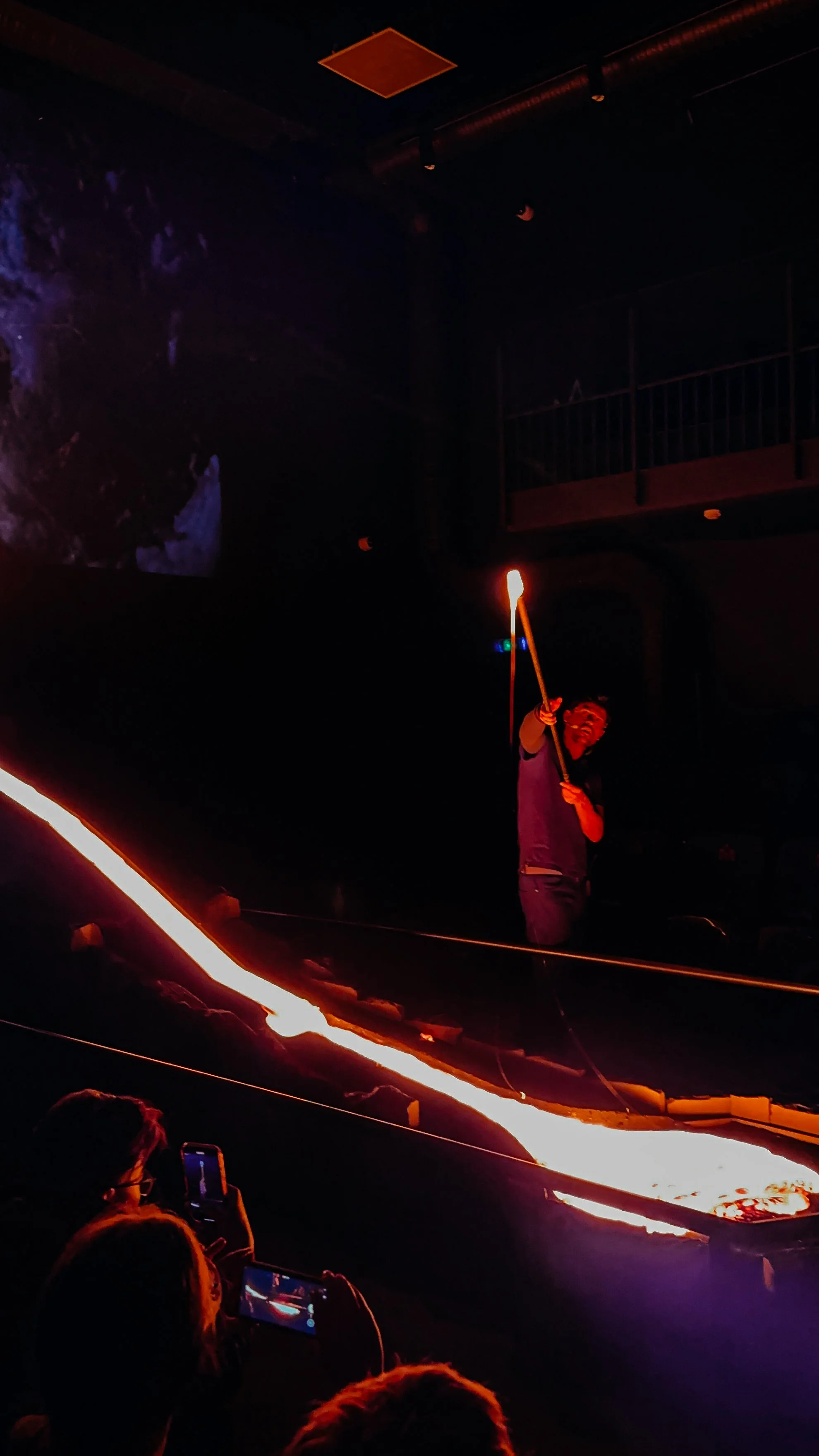
The Lava Show was much more exciting than we expected! The host was incredibly knowledgeable, witty, and fun, making the science easy to understand. Seeing real, molten lava up close while learning how it forms, it’s intense heat, and the way it cools was fascinating and highly entertaining.
Kattakaffihúsið (The Cat Cafe)
The Cat Cafe is exactly what it sounds like—coffee, pastries, and cats! It’s the perfect cozy pit stop. My youngest loves cats, and Reykjavik is no stranger to cats! We saw them all over the city and they would walk up to her for a scratch.
Harpa Concert Hall & Conference Centre
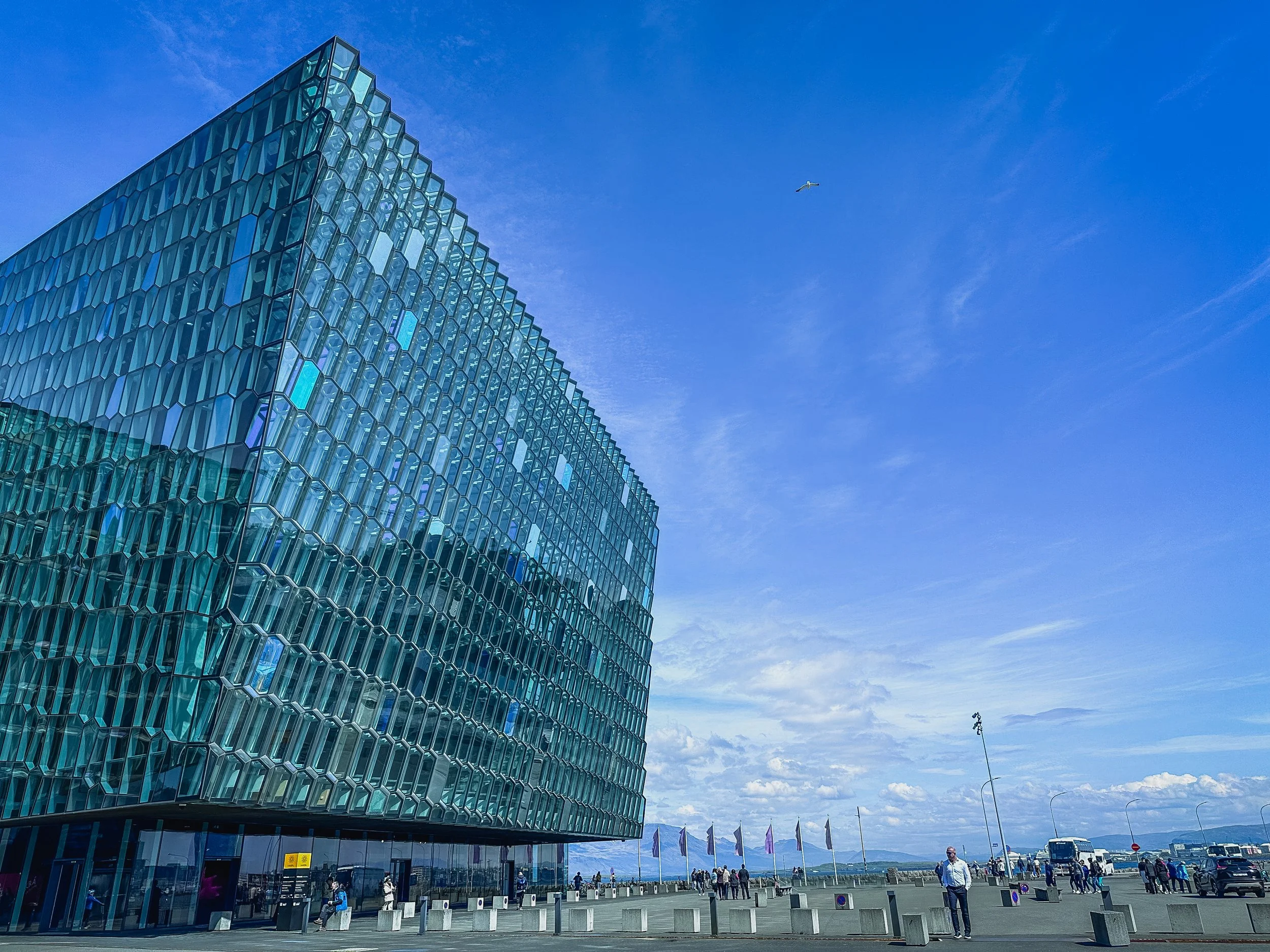
This building is a stunning honeycomb of glass and mirrors. We loved exploring the interior; the architecture is so unique and beautiful. It is a modern masterpiece, and is home to the national opera and symphony.
Sun Voyager
From the Harper, you can walk to the Sun Voyager, a iconic sculpture by Jón Gunnar Árnason, located next to the Sæbraut road. Sun Voyager is described as a dreamboat, or an ode to the Sun. The artist intended it to convey the promise of undiscovered territory, a dream of hope, progress and freedom.
Hallgrímskirkja
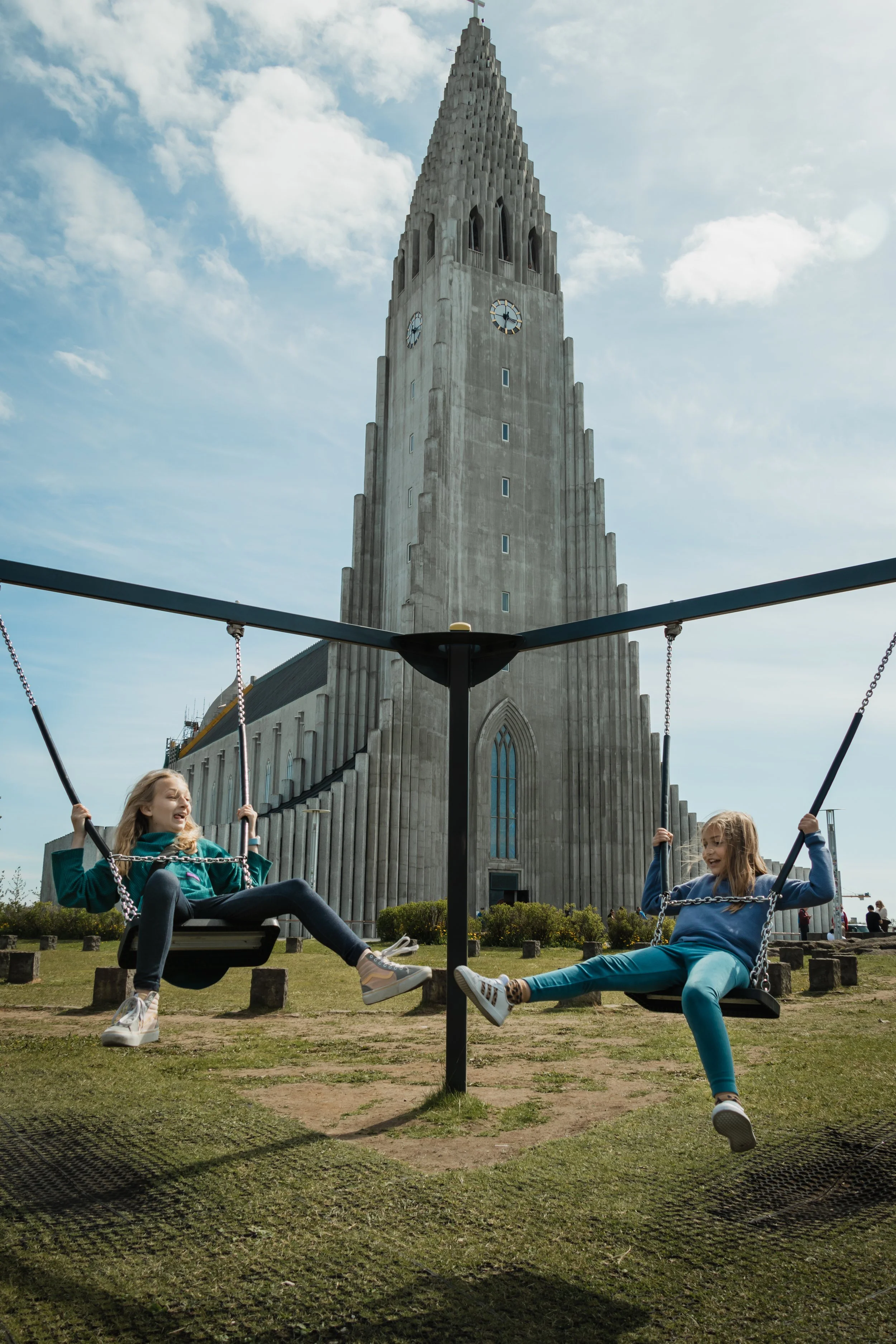
The Hallgrimskikia cathedral was inspired by Icelandic basalt columns and it is visible through-out Reykjavik. This spot became our favorite "home base." While the views from the 73m-high bell tower are expansive, we loved the grounds even more. It was our designated meeting spot, our snack zone, and the place where the girls burned off energy swinging on the swings and jumping between the stone columns.
Day 2: The Drive to Hvolsvöllur
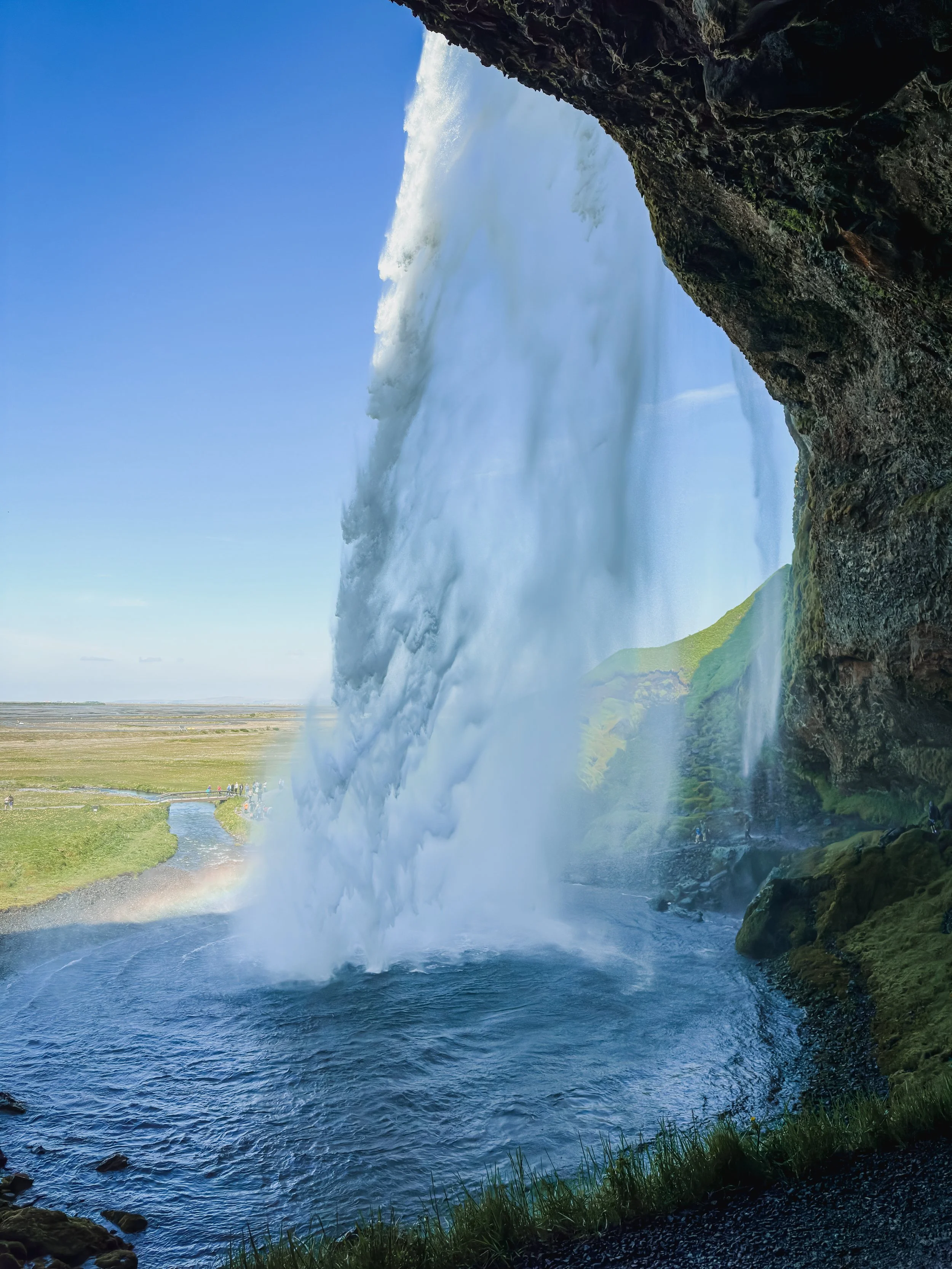
Seljalandsfoss
This is likely one of the waterfalls you have seen in many of the the iconic photos of Iceland - the one you can actually walk behind! Being that close allows you to truly see, hear, and feel the raw power of the water. Wear rain gear, you won’t just get "misted"; at one end, we had to walk directly under a small stream of water.
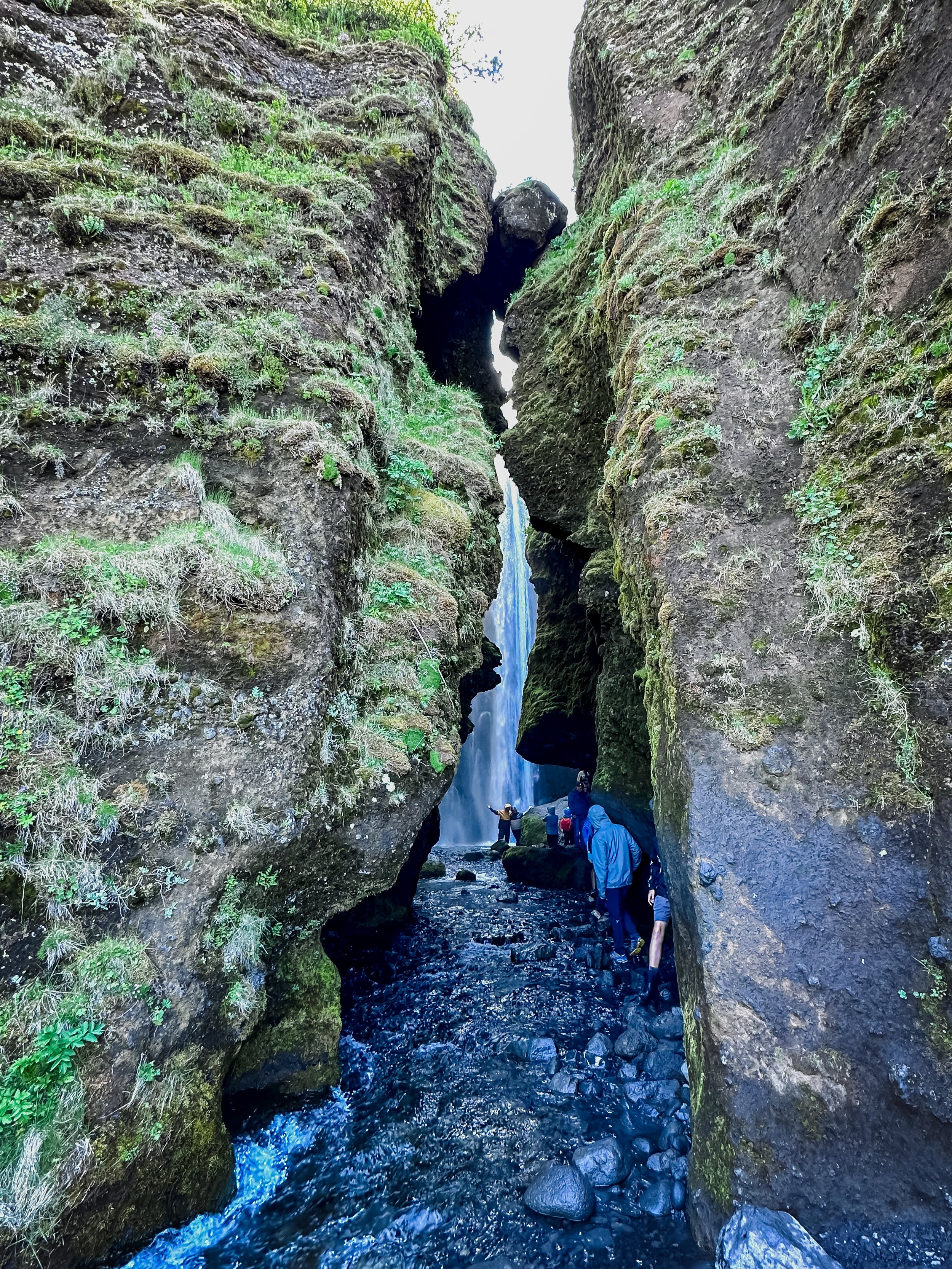
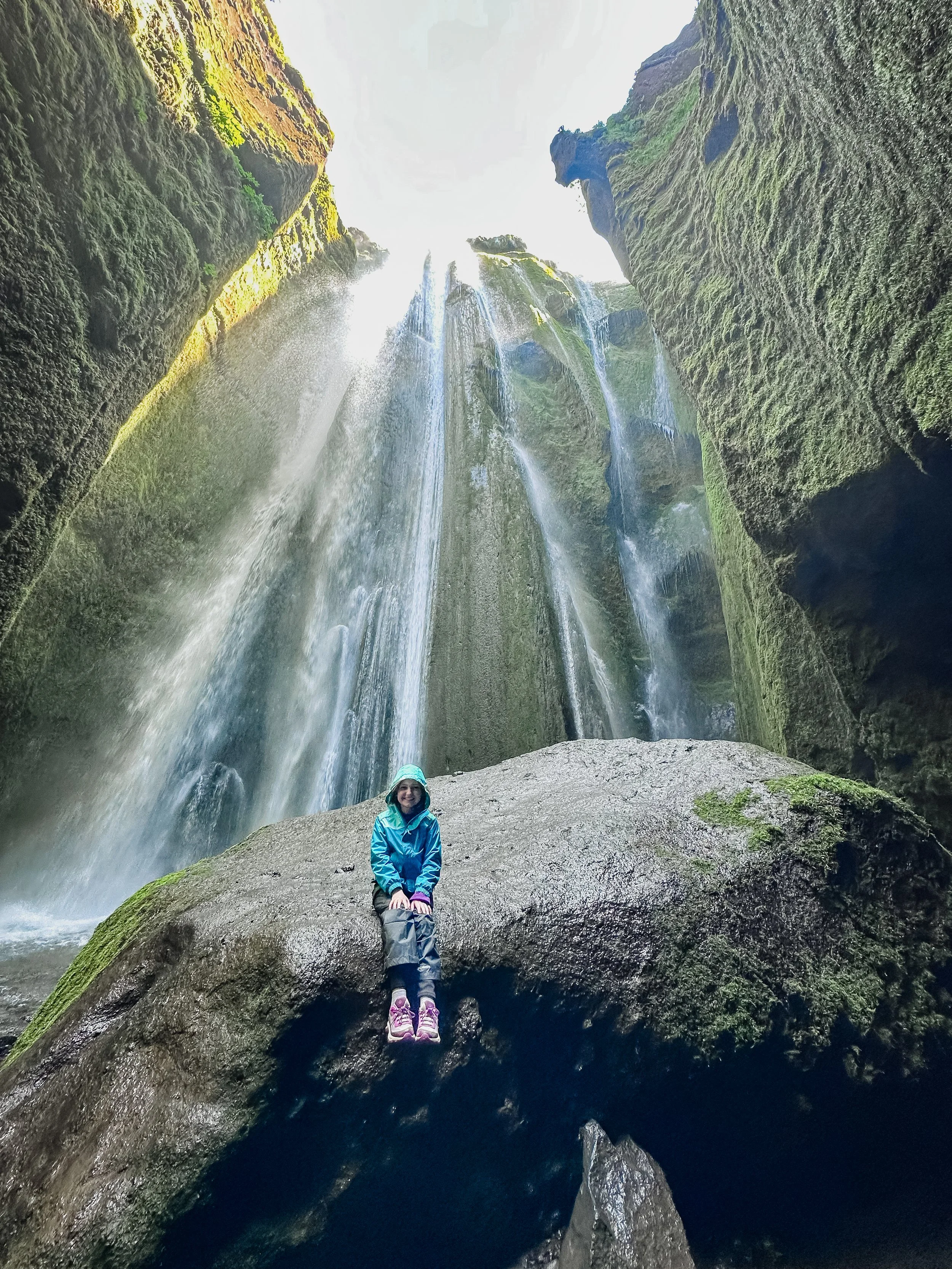
Gljúfrabúi
After walking behind Seljalandsfoss, follow the path to its neighbor, Gljúfrabúi. While many older blogs still describe this as a "hidden gem," the secret is definitely out! To see the falls, you must enter a narrow canyon/cave. We had to balance on a skinny ledge right above the water to get inside. (Waterproof shoes would be a massive bonus here.) Once inside, there is a large rock perfect for photos directly in front of the falls. Because the space is so tight, it’s a "one-in, one-out" situation—stay patient, wait your turn, and you'll get your moment in the mist.
There is one central paid parking lot for both waterfalls and restrooms are available on-site.
Day 3: The Icelandic Highlands
I cannot recommend visiting Landmannalaugar enough! I initially considered renting a 4x4 vehicle to explore on our own, but ultimately chose the easier (though pricier) route: a private tour with Ice Pic Journeys. It was, hands down, one of the best decisions we made.
The scenery was the most incredible, otherworldly landscape I have ever seen. Beyond the unbelievable beauty, the guides are friendly, knowledgeable, and—best of all—professional photographers. They document your entire excursion and send you a high-quality photo package a few days later. It was truly amazing! As a bonus, because it is a hard place to visit, there were no crowds ANYWHERE! There were other people around, but it was very minimal. There was also a perfect lunch spot where you can oder burgers and fries!
Highlights of the Journey:
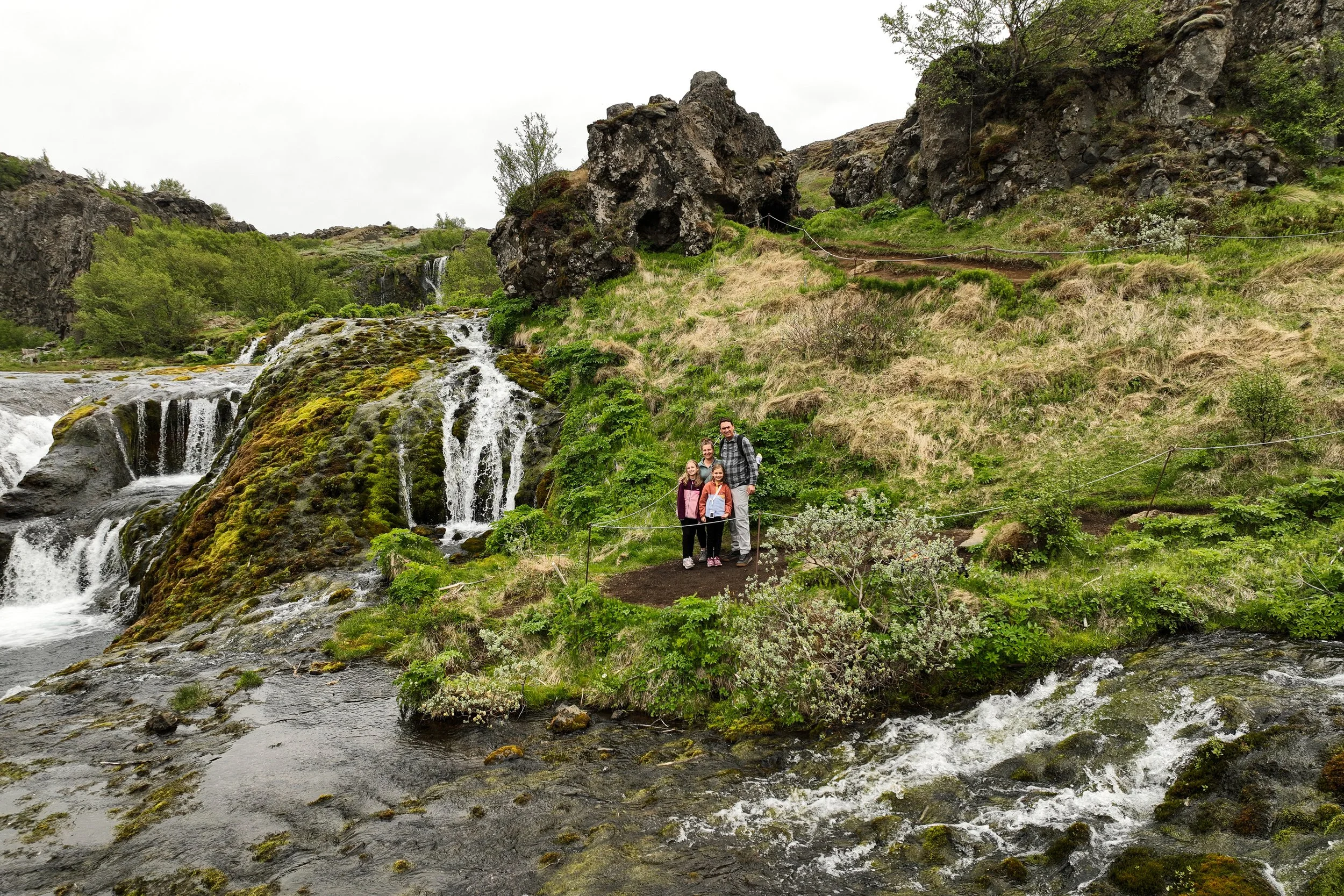
Gjáin: The Secret Oasis
You would never know this place existed unless someone showed you. Driving through the Highlands, it feels like you're surrounded by endless, desolate lava fields—until the guide pulls over. You step out of the car, look over the edge, and suddenly you're staring down into a lush, "fairytale" valley. It’s a vibrant sanctuary filled with waterfalls, basalt columns, and crystal-clear springs. It felt like stepping into another world entirely.
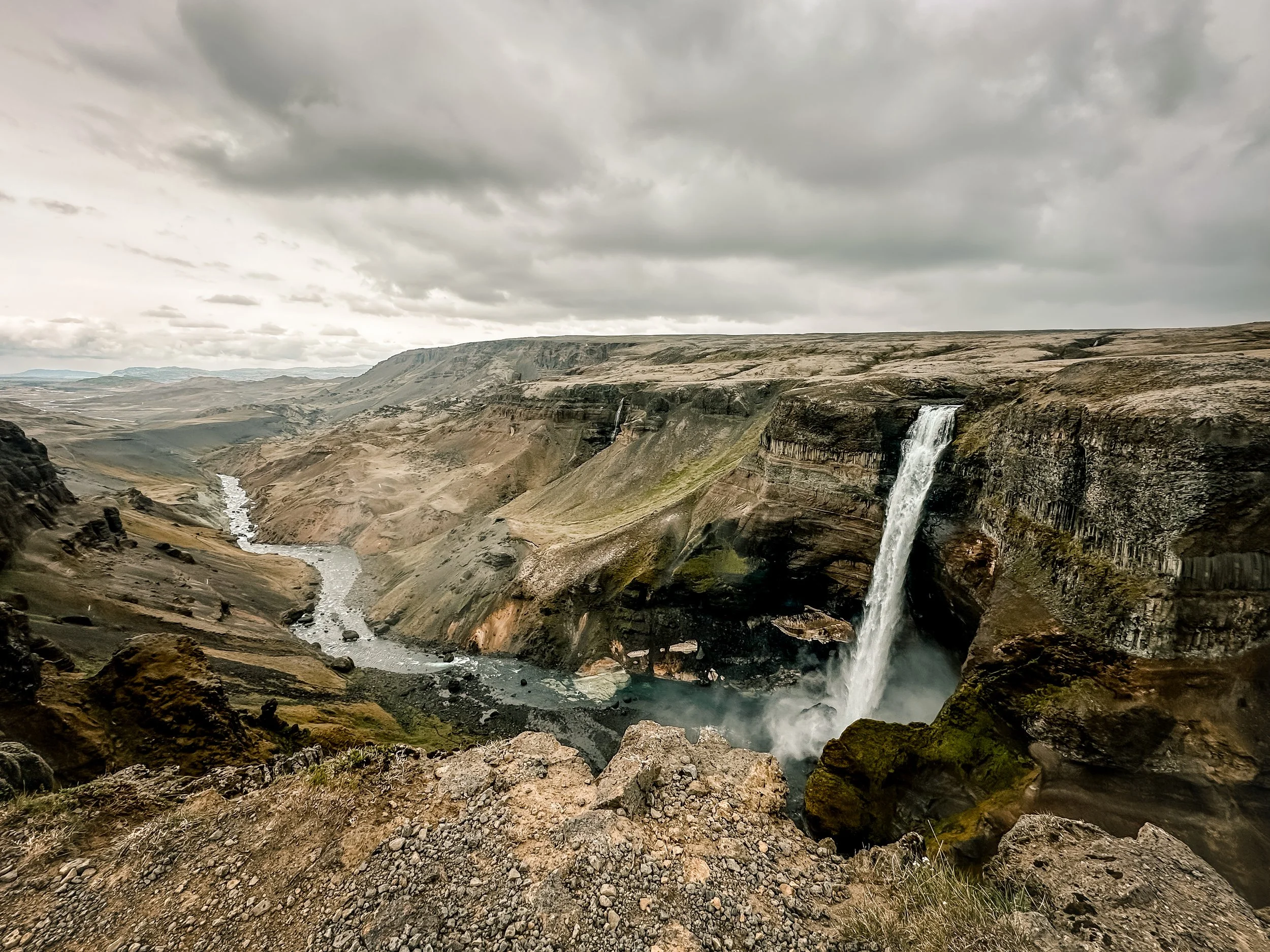
Háifoss
This is the fourth highest waterfall of the island, dropping into a deep, dramatic canyon, with breathtaking view of the canyon it created.
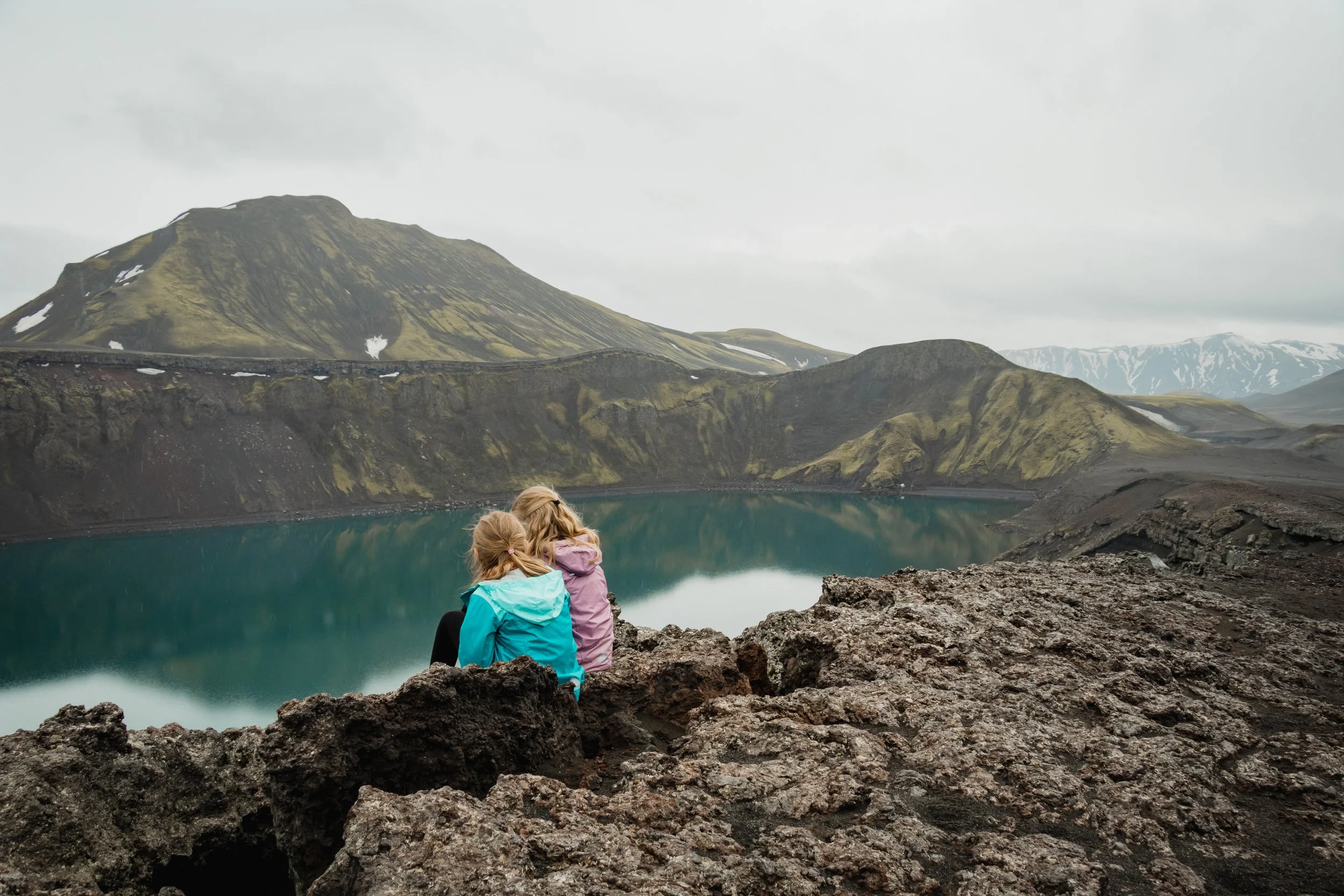
Ljótipollur
This is a crater lake with deep blue water contrasted against vibrant red and green slopes. We spent a long time here just taking it all in. The girls had a blast playing in the black volcanic sand and trying to throw rocks into the lake—though they quickly realized it’s much farther down than it looks! It’s one of those places that really makes you feel the immense scale of Iceland's nature. Our guide also took out his drone to take photos of us and showing the massive size of the crater.
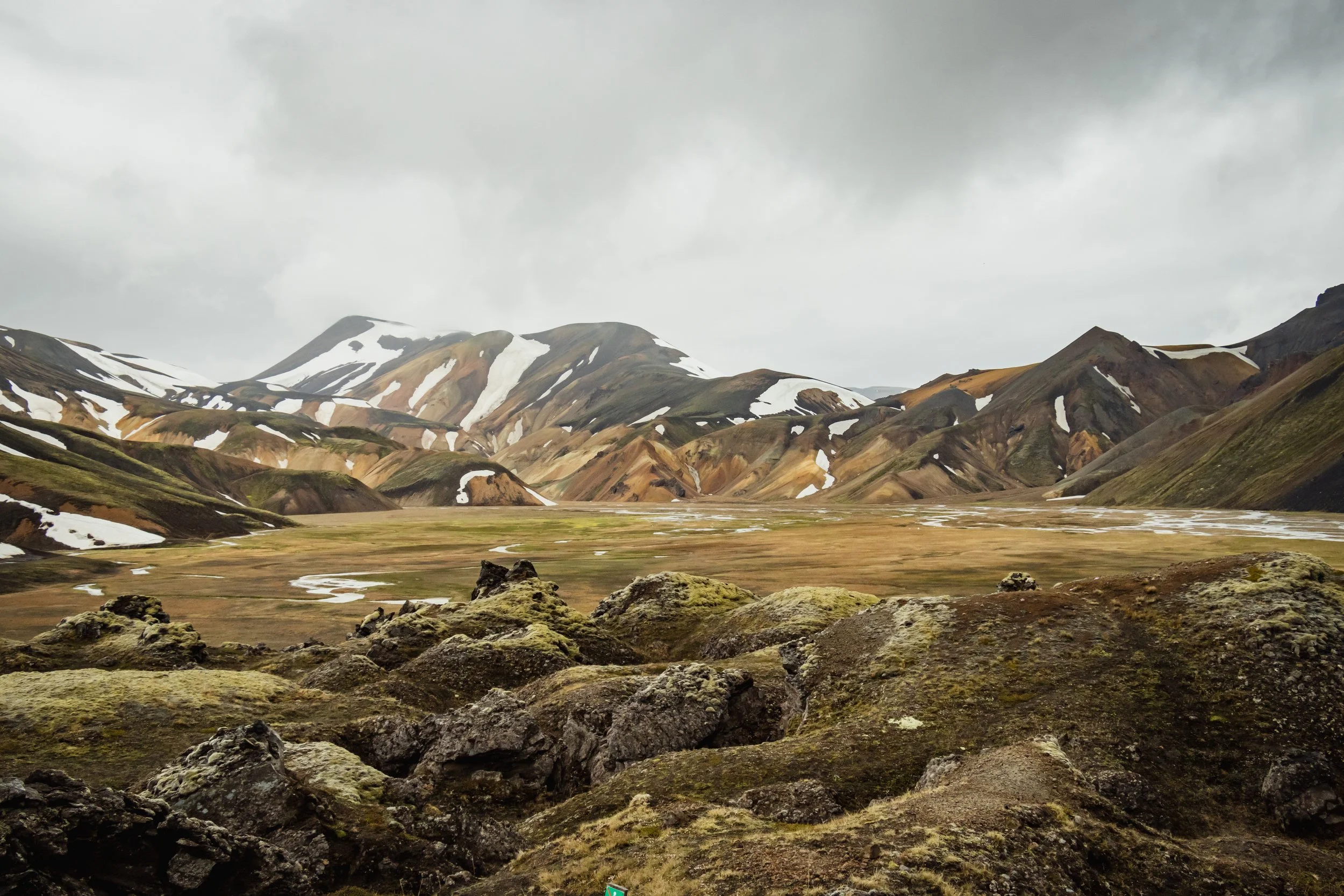
Landmannalaugar Hike
We hiked through surreal landscapes of "painted" rhyolite mountains surrounded by bubbling geothermal hot springs and vast lava fields. This place was so special. I wish I could have stayed here all day. The colors of the mountains was unreal, it was hard to leave!
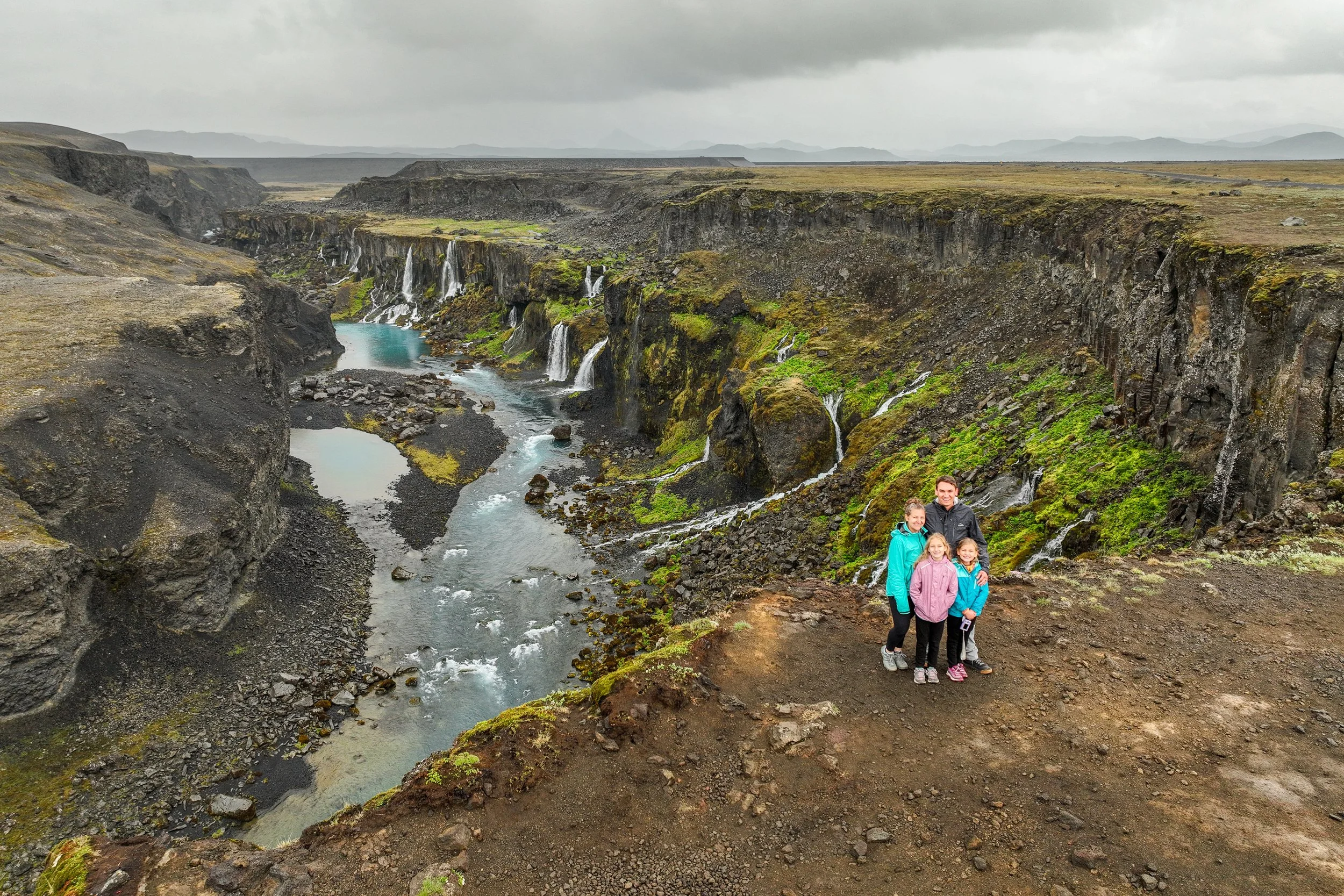
Sigöldugljúfur Canyon
Often called the "Valley of Tears," this canyon is famous for its towering walls and dozens of small waterfalls leaking into a vibrant blue river. The girls tried counting the waterfalls, it was well over 20!
Day 4: The South Coast Icons
Reynisfjara Black Sand Beach
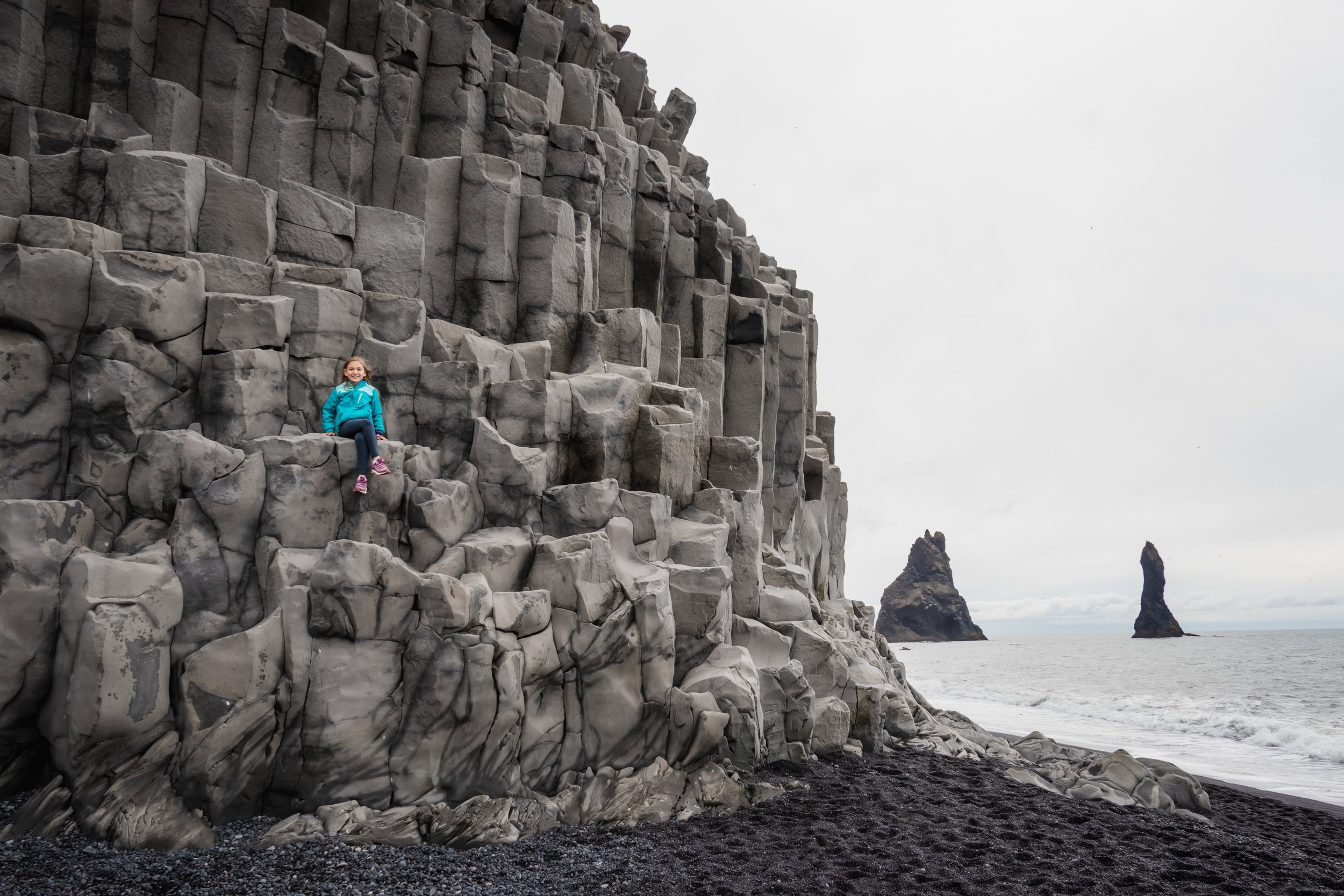
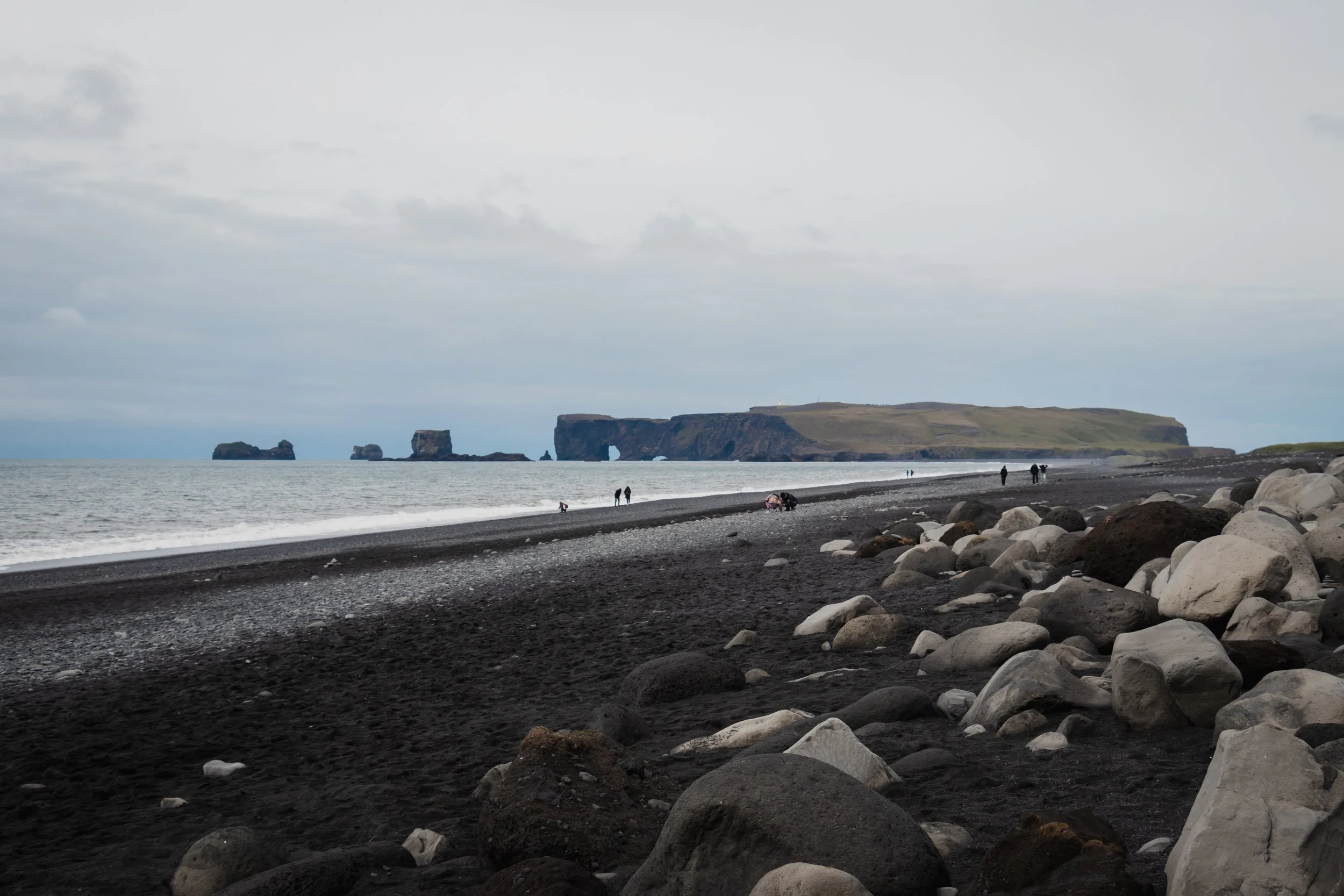
This is the famous black sand beach known for it’s basalt columns. The geometric rock formations are a sight to behold and so much fun to climb and photograph—it is truly a "picture-perfect" beach. While the columns are the main draw, the entire stretch of sand is beautiful. The girls had a great time playing in the black sand and building rock towers with Dyrhólaey visible in the distance.
⚠️ Safety Warning: This beach is notoriously dangerous. "Sneaker waves" can appear suddenly with an incredibly strong undertow, even when the water looks calm. Sadly, tourists have lost their lives here by getting too close to the water, so please stay vigilant!
Dyrhólaey
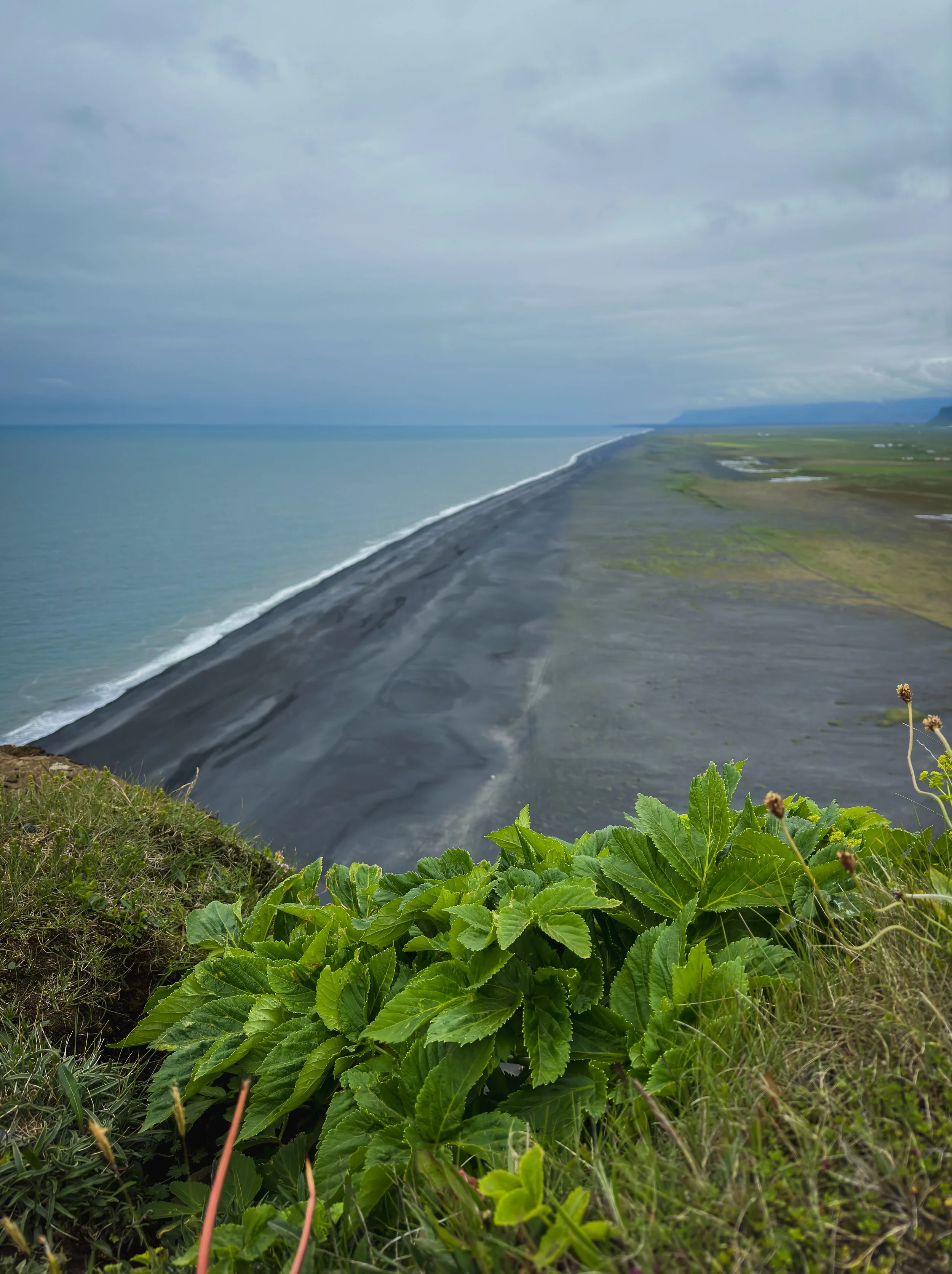
Named for the massive stone arch eroded from the headland by the sea, this spot offers breathtaking coastal views. Be sure to check out the lighthouse, and if you're lucky with the timing, you might even spot some puffins nesting in the cliffs!
Vík í Mýrdal
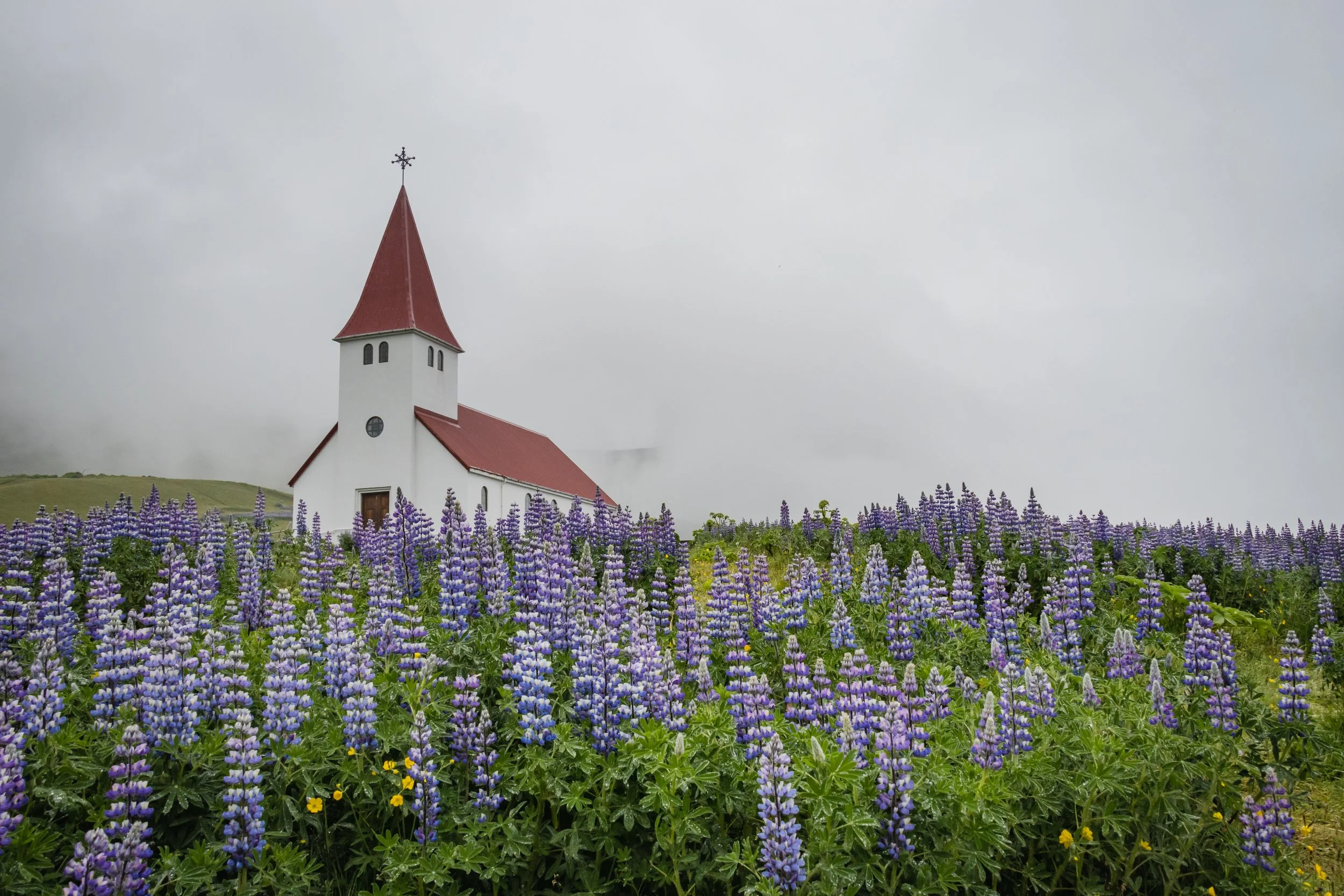
We spent a long time frolicking in the fields of purple lupine surrounding the iconic red-roofed church. The contrast of the flowers against the landscape was so beautiful I just couldn't get over it!
DC Plane Wreck (Sólheimasandur)
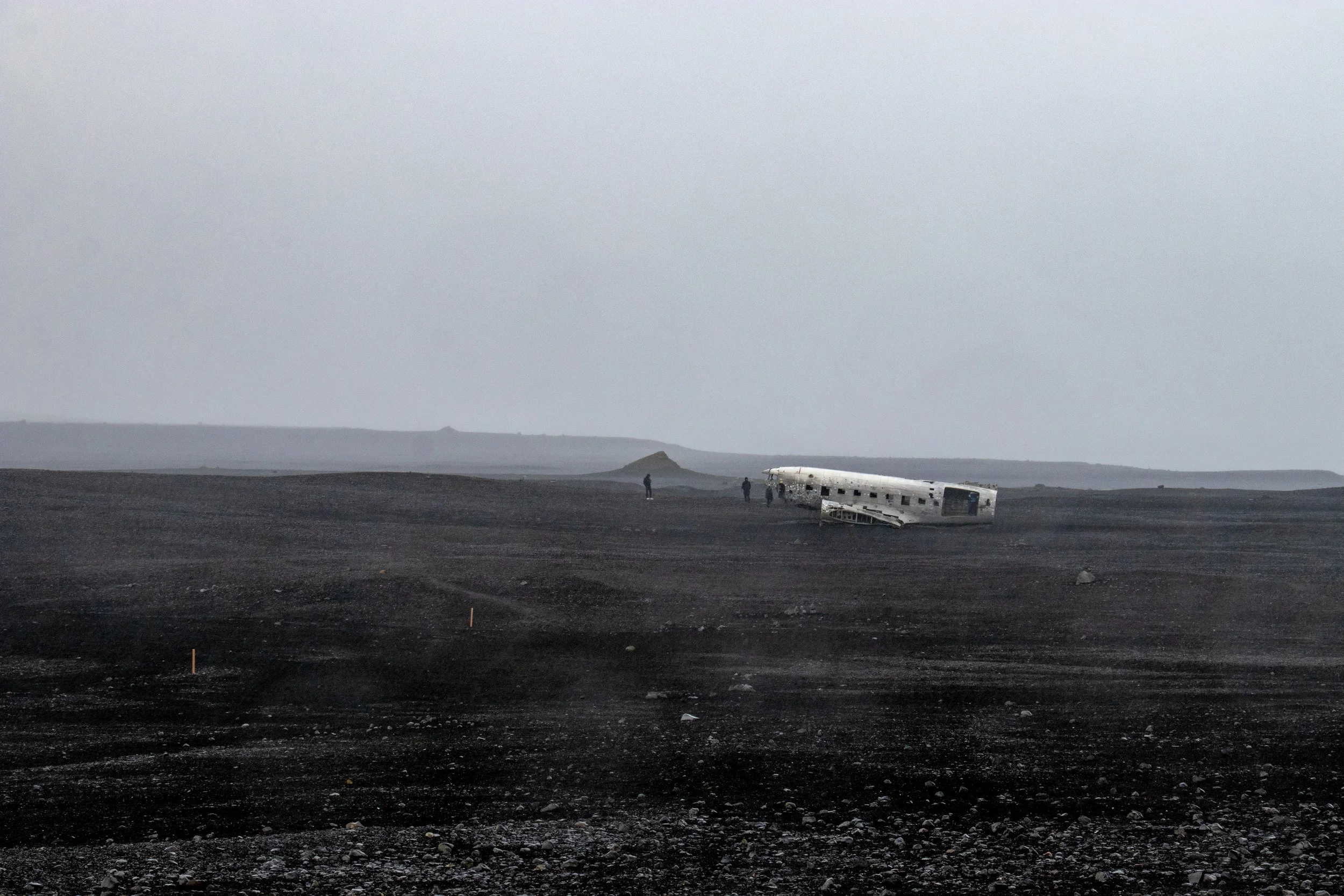
In 1973, a US Navy DC plane made a forced landing on this black sand desert. Thankfully, everyone survived, but the plane wreckage is still there, a small wrecked airplane surrounded by desolate black lava fields.
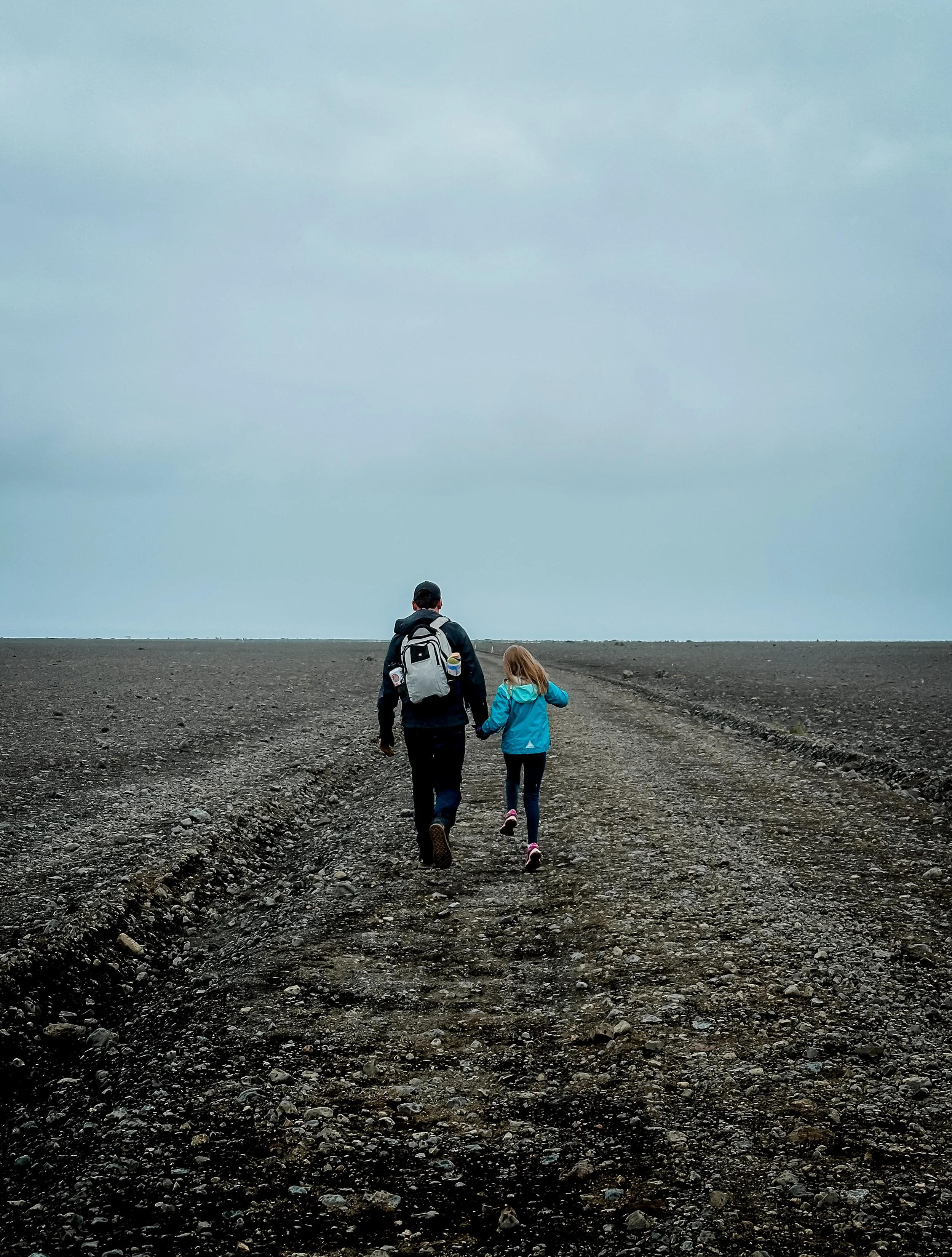
It’s a 2.5-mile (one-way) walk to the wreckage. The path is flat and easy, but it created the strangest "treadmill" feeling! Because the black lava fields stretch endlessly in every direction with no landmarks, it felt like I wasn't moving at all. I actually had to look at my feet to prove I was making progress! It took us about 45 minutes to walk there. There is a shuttle (about $20 per person), we chose to walk out and then opted for the shuttle ride back.
Skógafoss
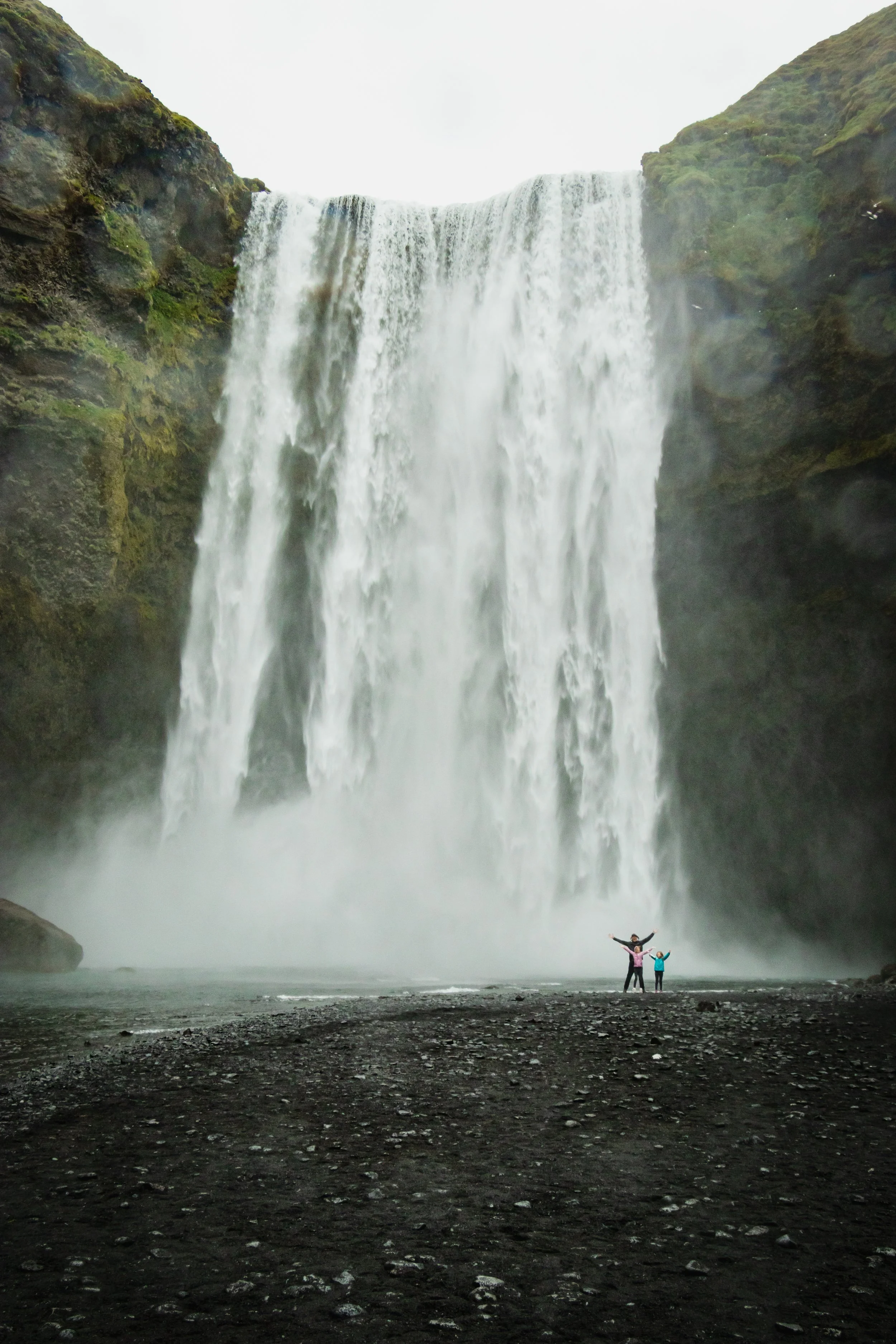
One of Iceland’s most recognizable waterfalls, Skógafoss is visible right from the Ring Road. Parking is free, and you can walk right up to the base of the falls—just be prepared to get soaked by the spray! There is a steep staircase leading to a viewing platform at the top. We decided to skip the climb this time because it was cold and rainy, and we were ready to get warm and dry.
We did learn while in Iceland, if you only do things in Iceland when the weather is perfect, you’ll never do anything! Plus, embracing the "bad" weather usually means much smaller crowds.
Day 6: The Road to Höfn
Fjaðrárgljúfur Canyon
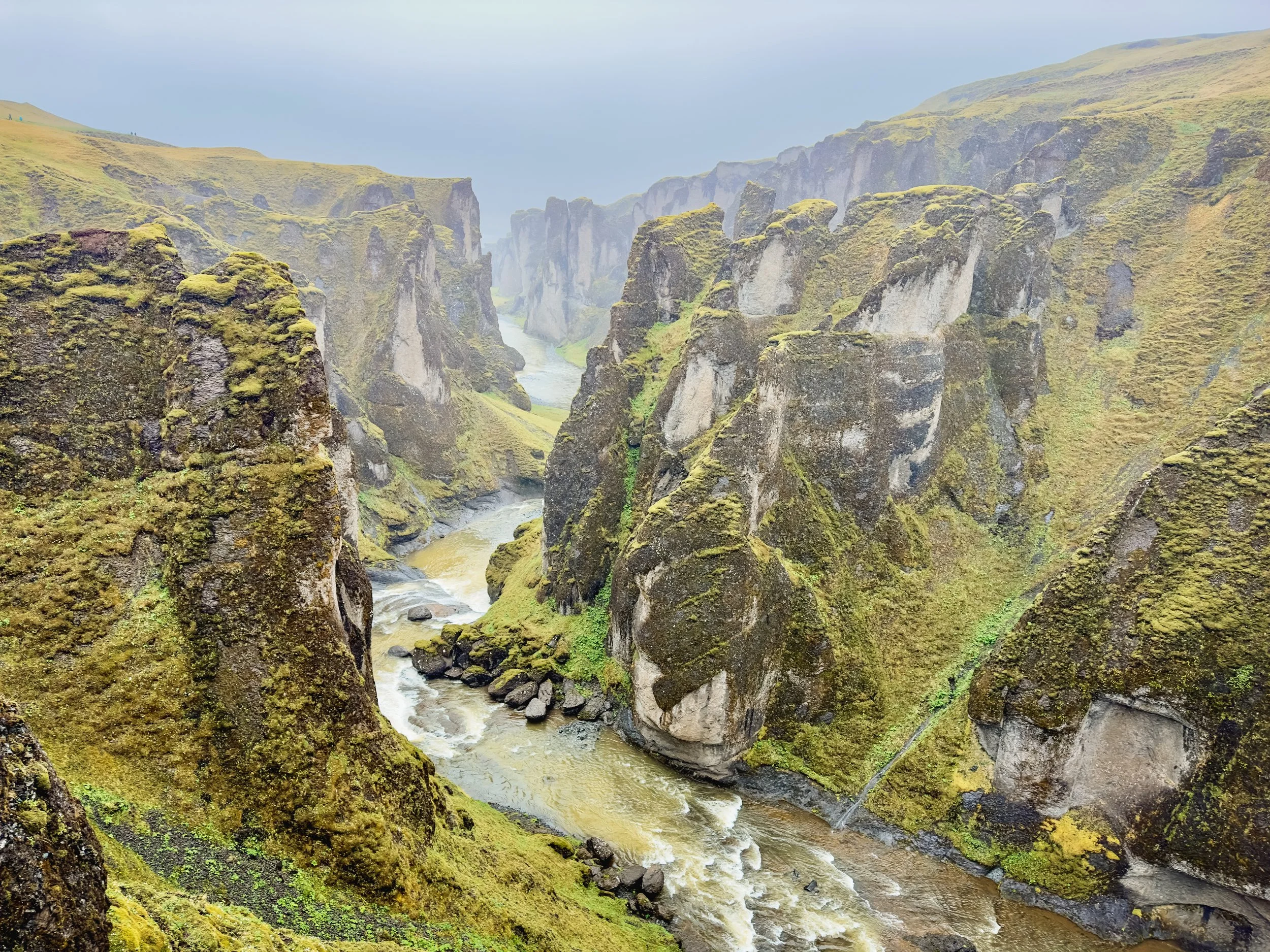
This canyon is a masterpiece of nature. To see it, you follow a fairly easy walk along well-maintained paths that hug the ridge. There are several metal observation platforms along the trail, including a large one at the end that offers a perfect view of the waterfall and the winding, mossy canyon it carved over millennia. We visited in light rain, and it didn't take away from the beauty at all! Thankfully we were prepared with rain jackets and water resistant pants and shoes.
Svínafellsjökull Glacier
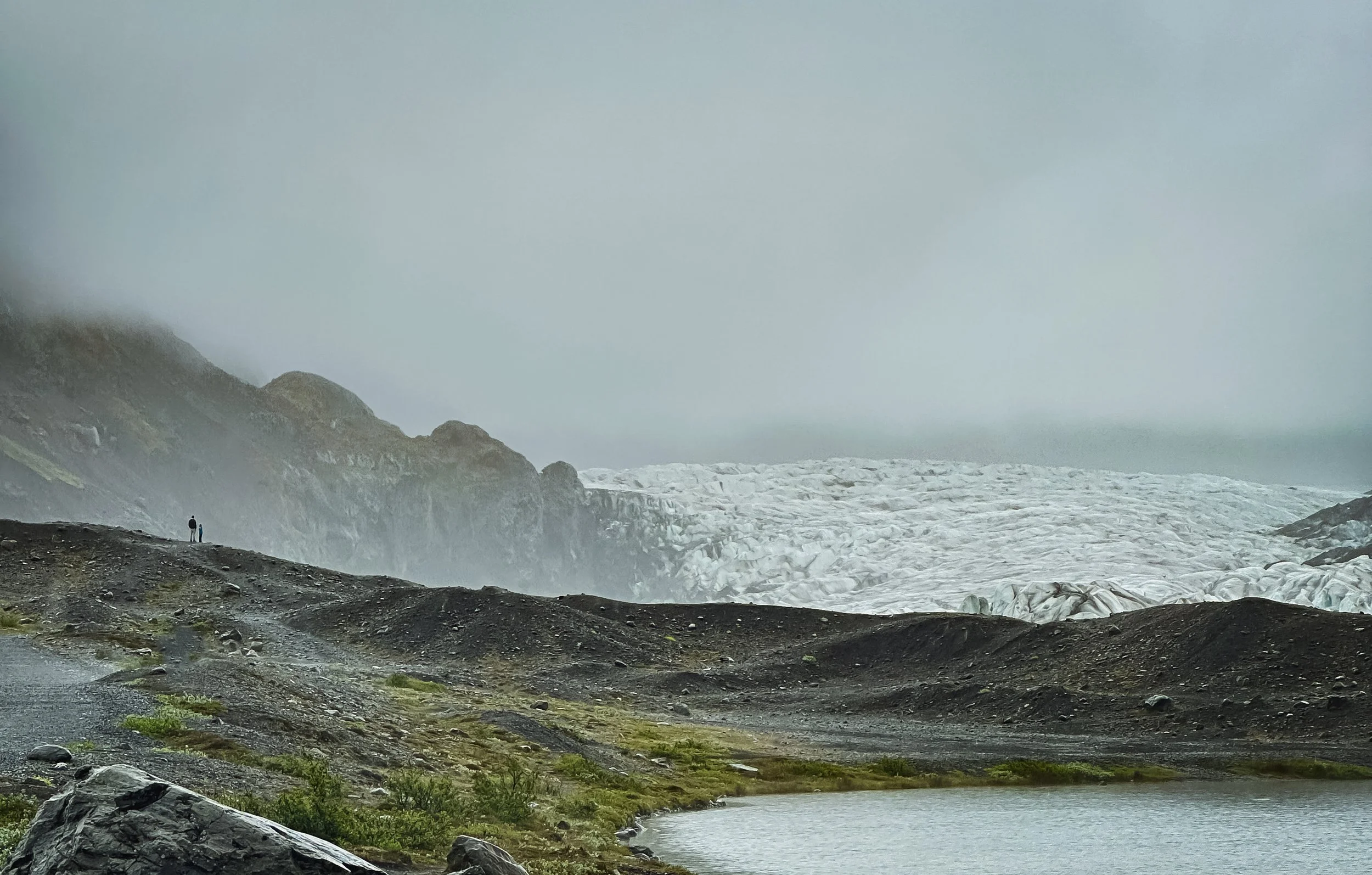
This was the first glacier I had ever seen, and I will never forget how massively impressive it was! A short, easy hike along a wide dirt path leads you to the viewing area. Once you crest the hill and see how enormous and how blue the ice is, you realize it was worth every step! You can even walk down closer to the glacier’s edge. My daughter and I stayed here for a long time—we had so much fun exploring!
⚠️ Safety Warning: While you can walk down to the edge of the ice at Svínafellsjökull, never step onto the glacier itself without a professional guide and proper equipment (crampons/axes). Glaciers have hidden crevasses and shifting ice that can be extremely dangerous!
Day 7: Ice, Lagoons, and Diamonds
Jökulsárlón Glacier Lagoon & Boat Tour
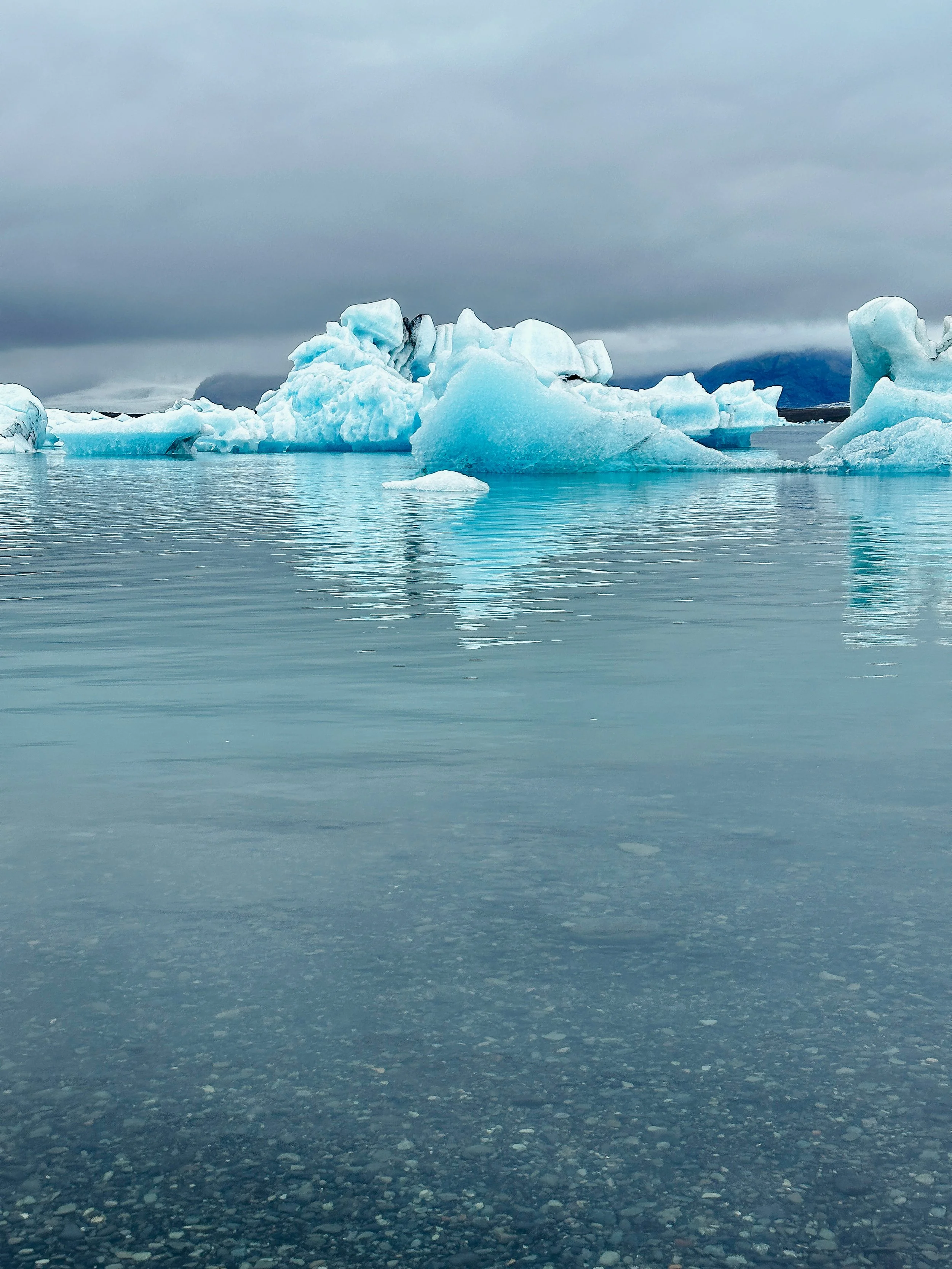
This is a must-do, but be sure to book your tickets in advance so you don't miss out! The boat takes you deep into the lagoon, getting you close to the massive, floating icebergs and the glacier tongue itself. Our guide even fished a piece of ancient ice out of the water for us to pass around. We were also lucky enough to spot a seal taking a nap on one of the icebergs!
Ice Cave & Glacier Hike
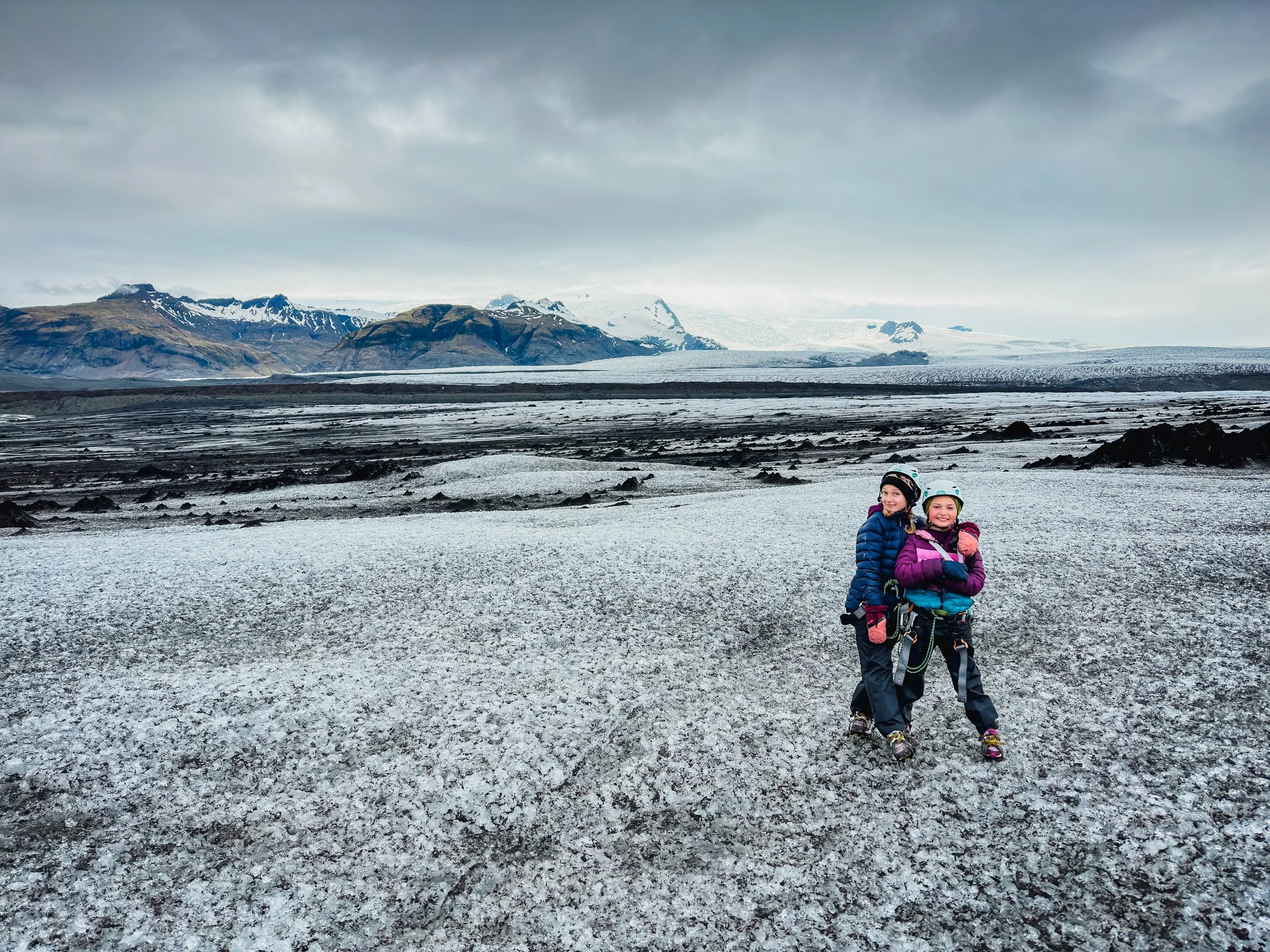
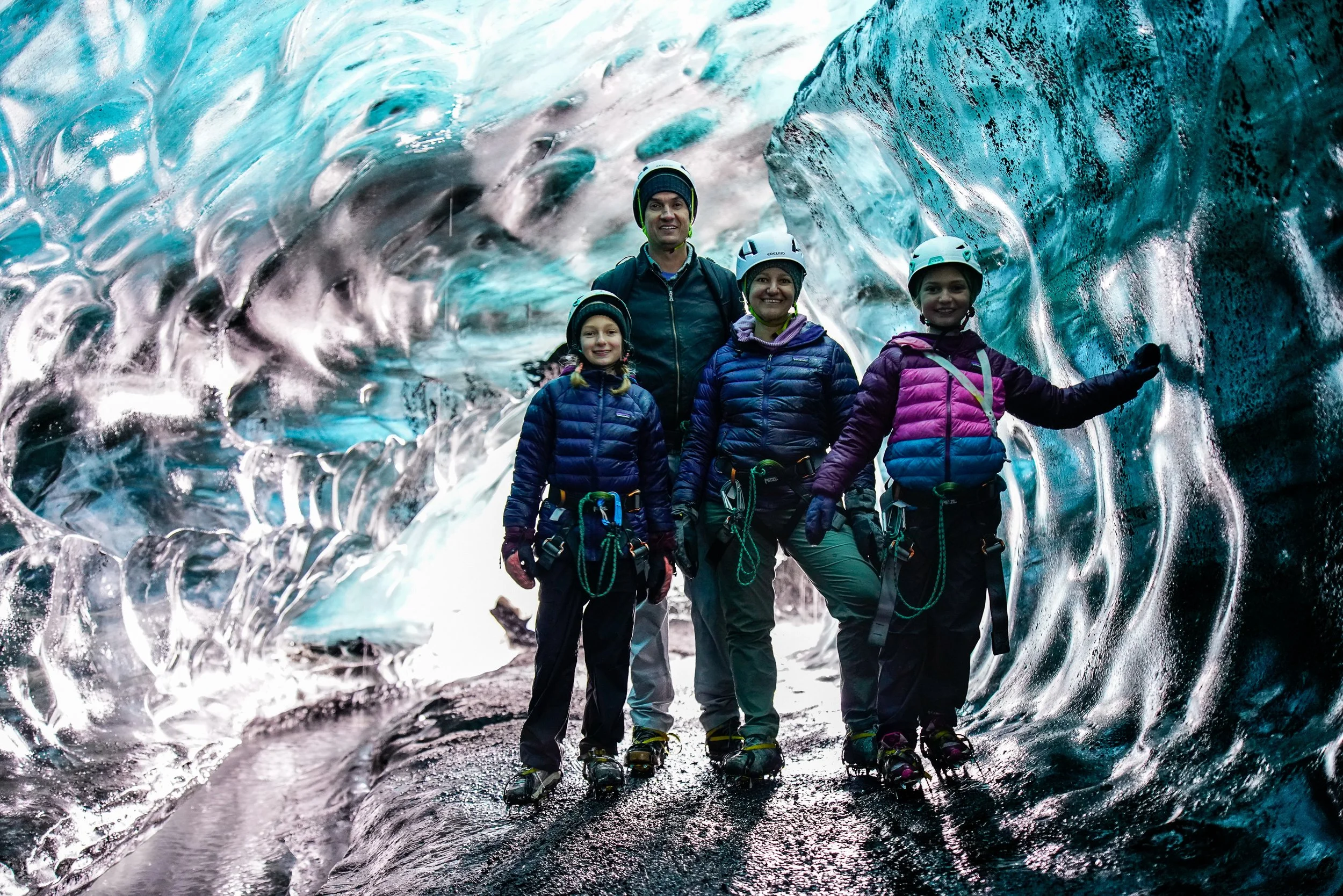
We headed back out for another incredible tour with Ice Pic Journeys. This time, we joined a small group that was split into even smaller, more intimate teams. (My family of four was alone with a guide and the rest of the adults went with the other guide! Benefit of traveling with kids!) They outfit you with crampons and helmets. Make sure to dress for full winter weather! The glacier is significantly colder than the mainland, and you will feel it.
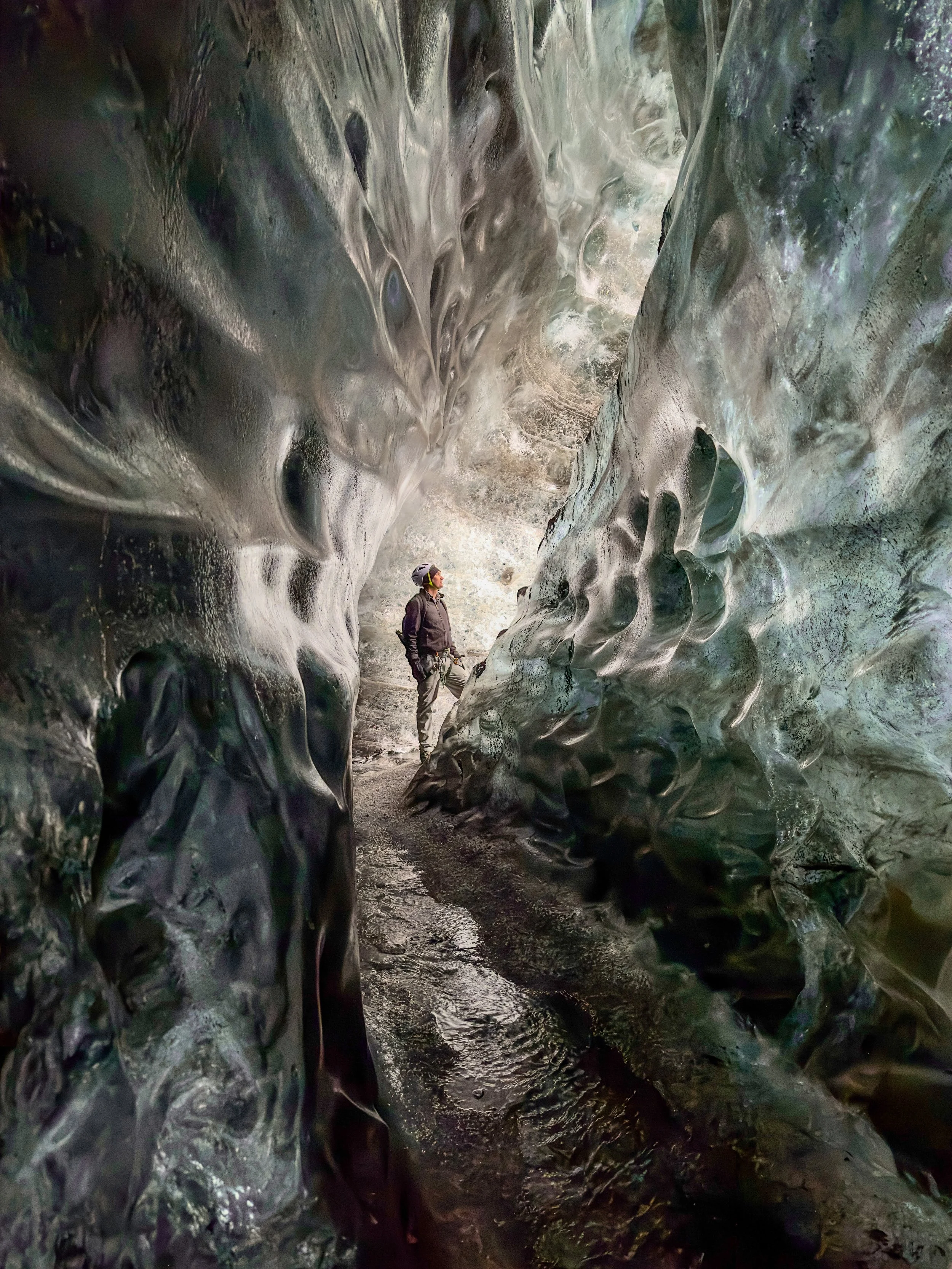
We started off in the ice cave, and it was hands down one of the coolest experiences of our visit to Iceland! Being surrounded by translucent blue walls carved by glacial meltwater was truly a dream. Because it was just us four and our guide, and the area wasn't crowded, our guide/photographer took us through the cave twice! Because we decided to book this cave, we skipped the Katla Ice Cave. Looking back at how much we loved this experience, I wish we had done both!
After the cave, we explored the vast surface of the glacier, crossing streams and taking in the massive scale of the ice untill we were too cold to enjoy it anymore and hiked back to the van for heat and snacks.
Diamond Beach
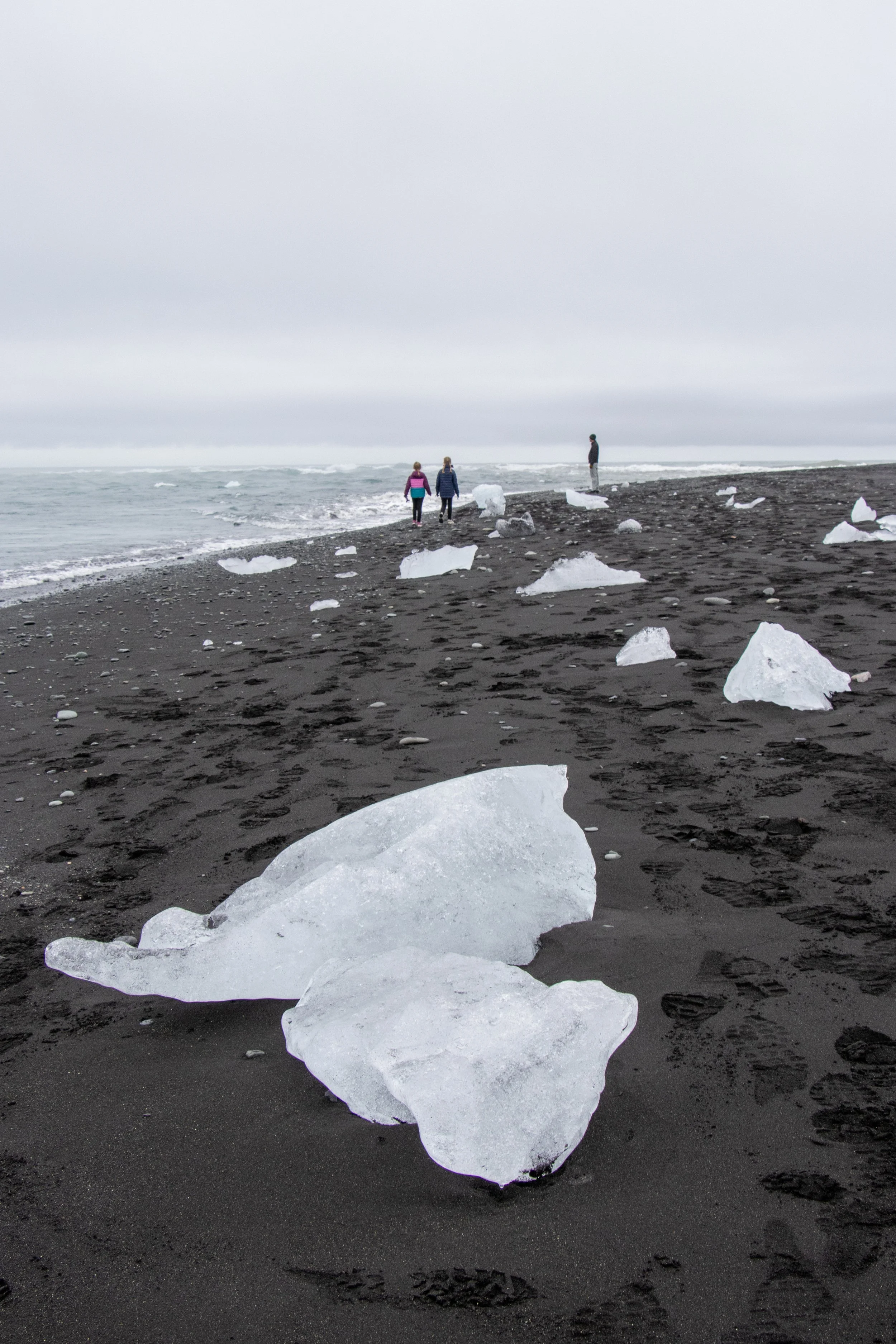
Diamond Beach is located just across the road from the lagoon. This is where the icebergs from Jökulsárlón wash up on the shore. It’s named for the way the ice glitters like giant diamonds against the black volcanic sand. Keep in mind that the beach changes constantly with the tide. When we drove by earlier in the day, the "diamonds" were huge; by the time we returned to walk on the sand, the tide had shifted and the pieces were smaller—but they were still impressive!
Day 8: The Eastern Fjords & Mountains
Stokksnes & Vestrahorn
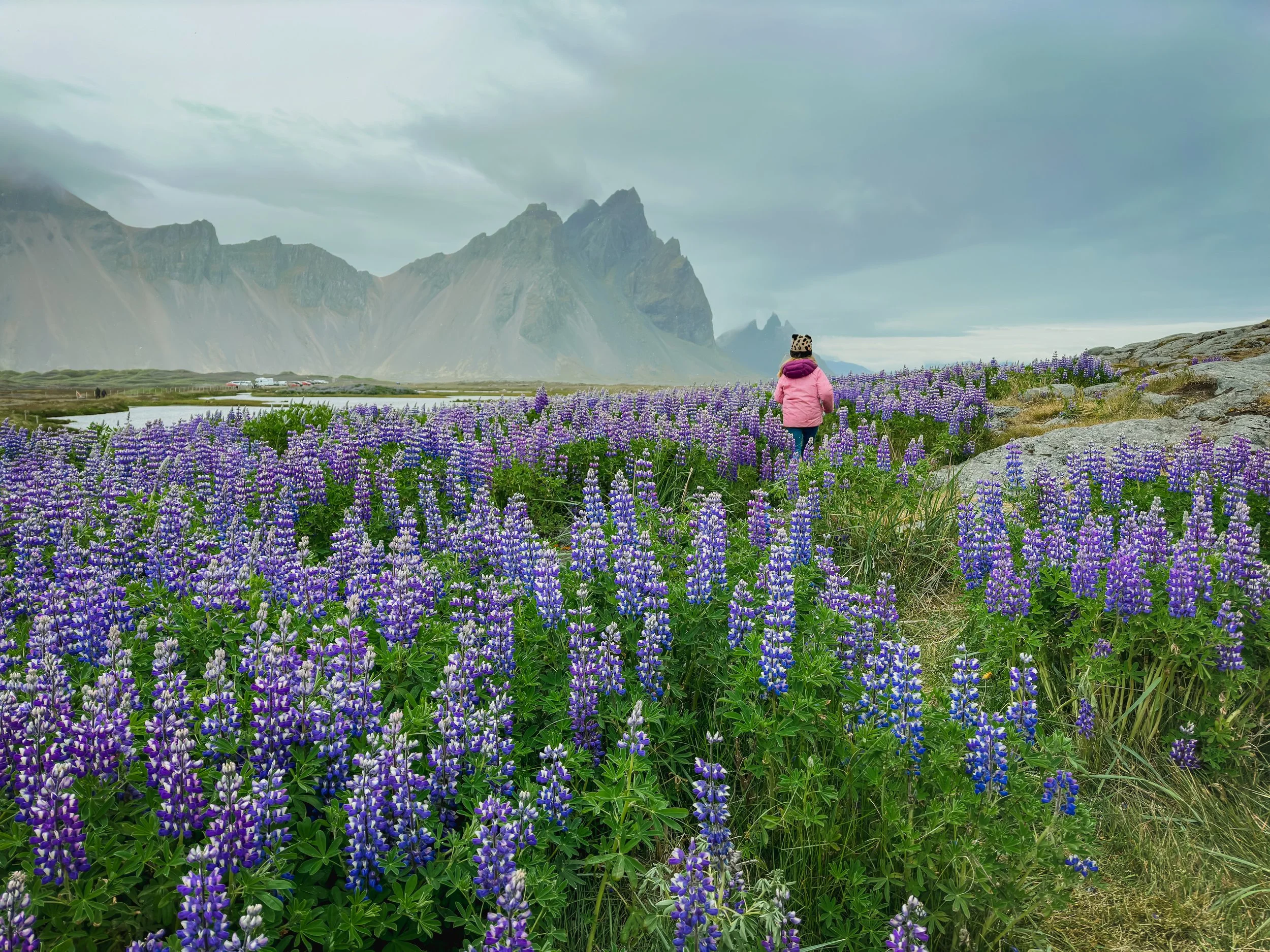
This beach is iconic for its mirror-like reflections of the jagged Vestrahorn mountains on the wet sand. There is an entrance fee to access the area, which also includes the Viking Village. While I learned the village is actually a movie set rather than an authentic historical site, it was still a lot of fun to explore!
Be prepared for the elements. During our visit, the beach was incredibly windy and cold, with sand whipping into our faces. Because of this, we didn’t stay here long, we decide to drive past the beach just to see what was down the road. I happen to notice a bunch of people getting out of a van with cameras and tripods. Pro Tip: If you see a group of professional photographers jumping out of a van, follow them! We followed them on a path from the parking lot that led us to the most dramatic view: the towering mountains in the distance, framed by fields of purple lupine in the foreground. It was absolute perfection.
Krossanesfjall & Hvalnes Lighthouse
As we continued on the Ring Road, I put into Google the Hvalnes Lighthouse. This bright orange tower is a visible landmark from a distance, I had read the view here is amazing, and it’s true! By this point, the family was cold and tired, so I hopped out solo to take some photos while they stayed warm in the car. It’s a quick but highly rewarding stop for any photographer!
On the Road to Egilsstaðir
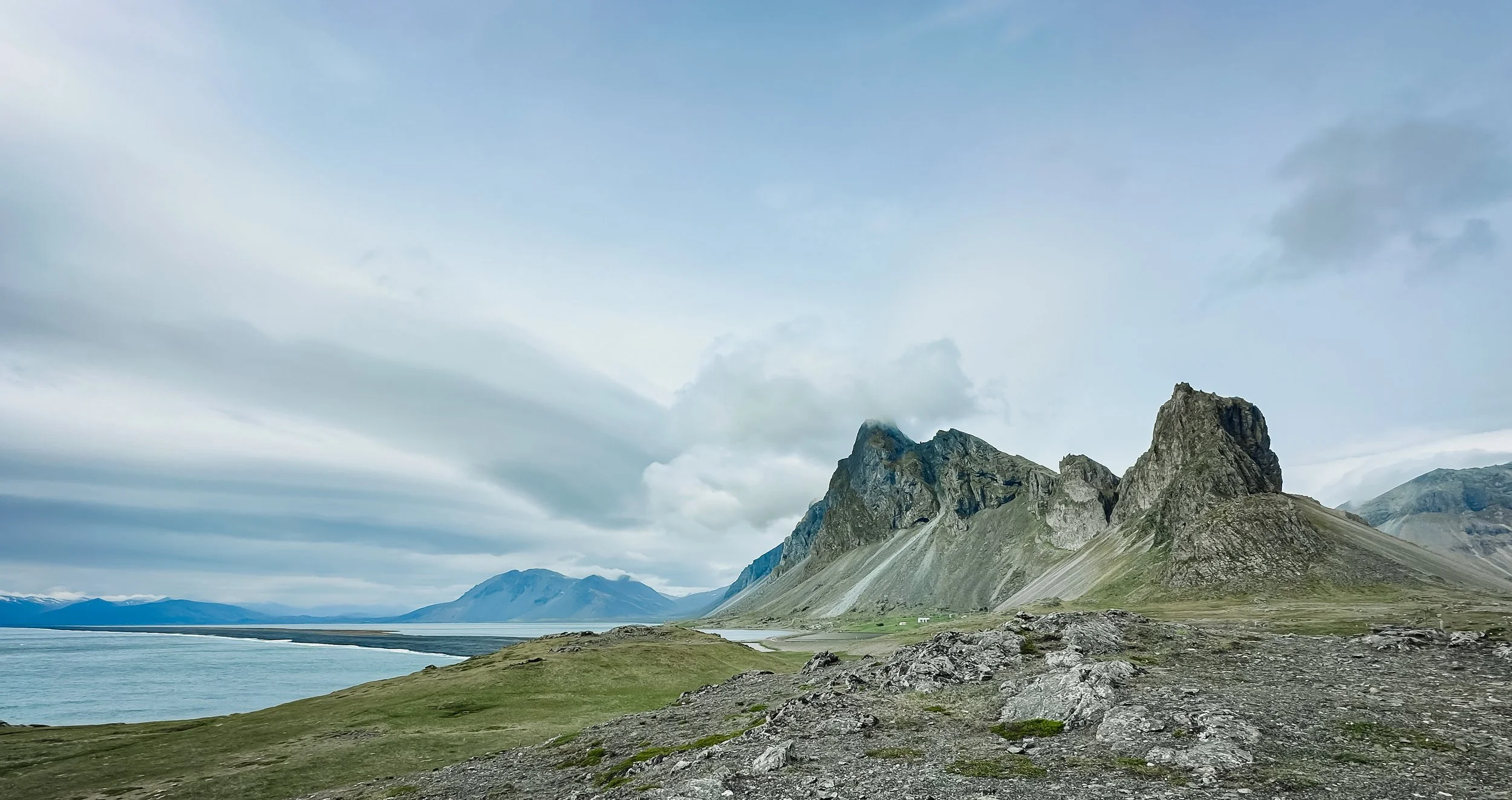
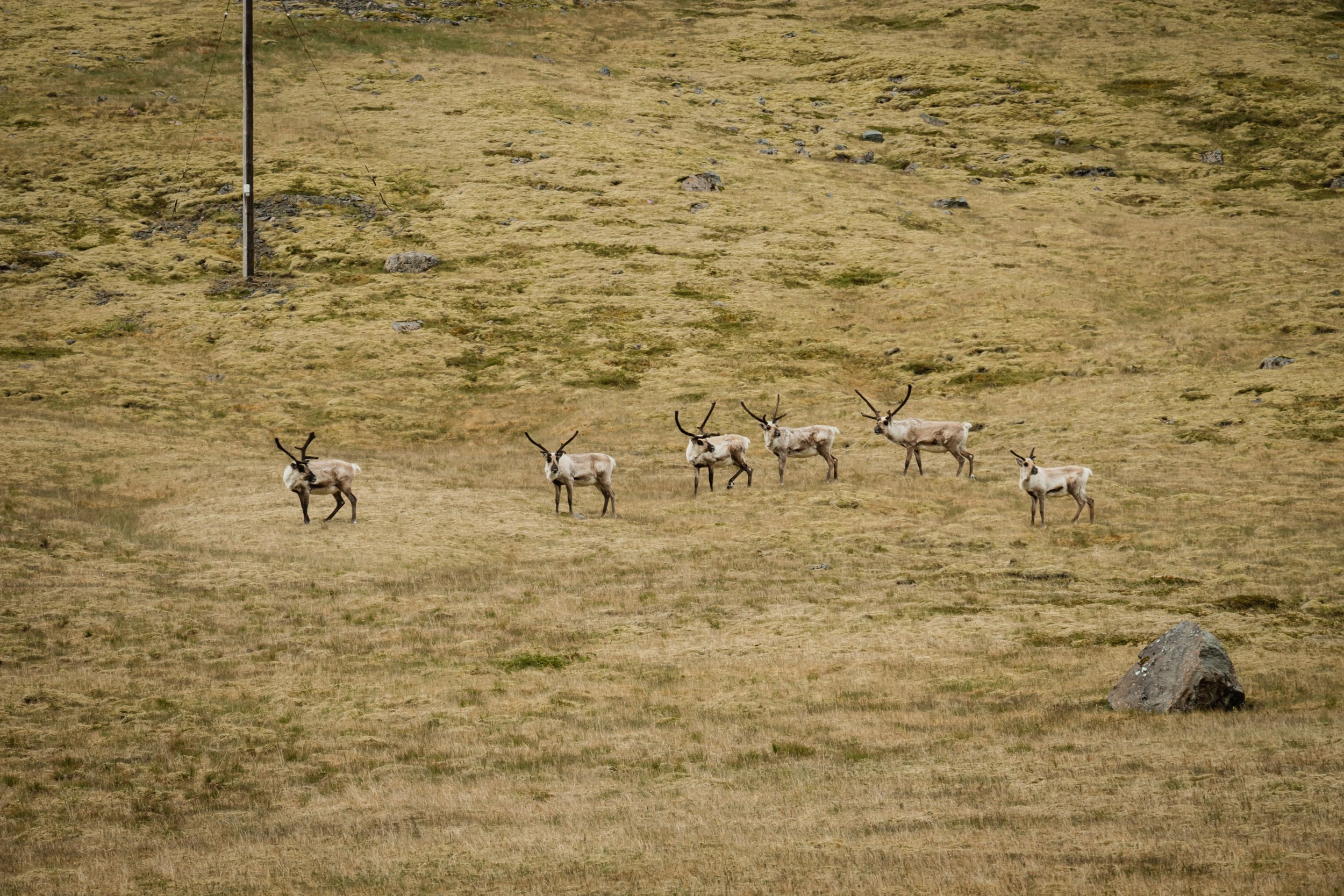
The drive into the East Fjords is known for its winding roads and steep mountain passes. Keep your eyes peeled for reindeer—this is the only part of Iceland where they roam wild! We happened upon three different herds on the stretch of the highway, it was so amazing!
Day 8: Rainbows and Puffins
Seyðisfjörður
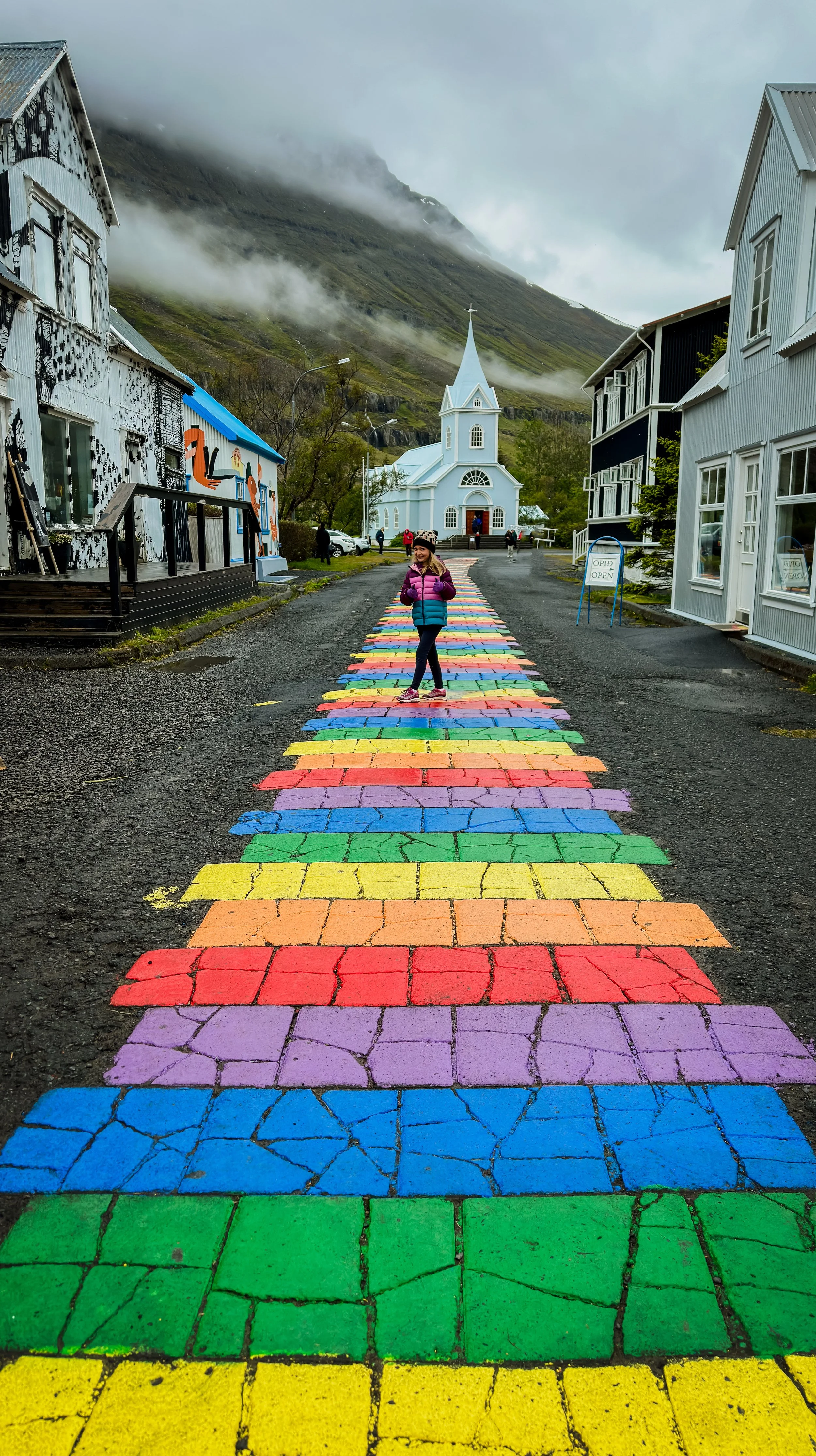
To reach this town, we drove over a windy and windy mountain pass that descends into a stunning fjord. Seyðisfjörður is a quaint, artistic village famous for its Rainbow Road—a colorful path that leads directly to a picturesque, light-blue church. The town is surrounded by shops and historic wooden buildings. It’s incredibly beautiful, though we noticed it can get quite busy when a cruise ship is in port, witch it was when we were there. Even with the crowds, it was well worth the visit!
Borgarfjörður Eystri (Hafnarhólmi Marina)
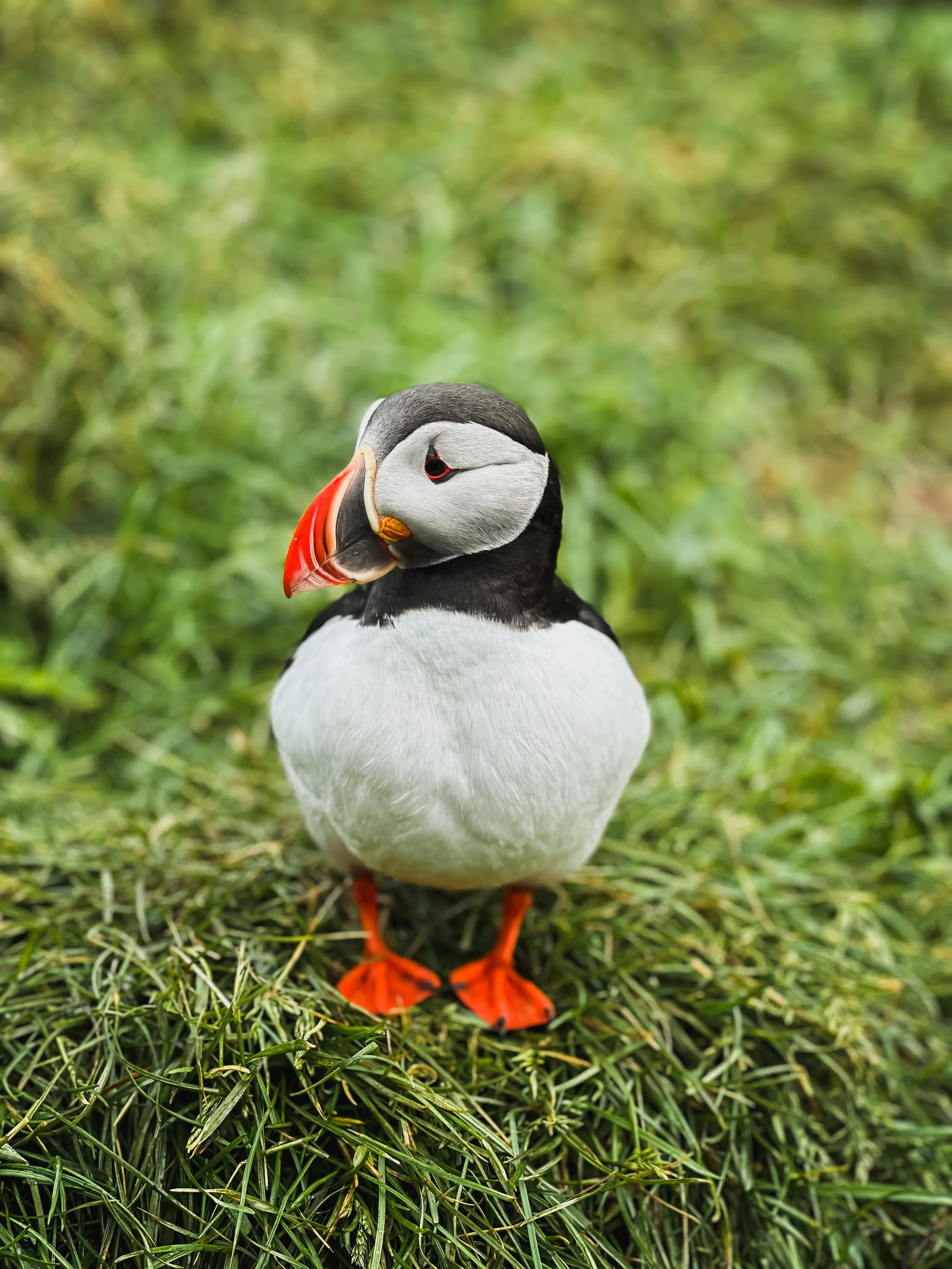
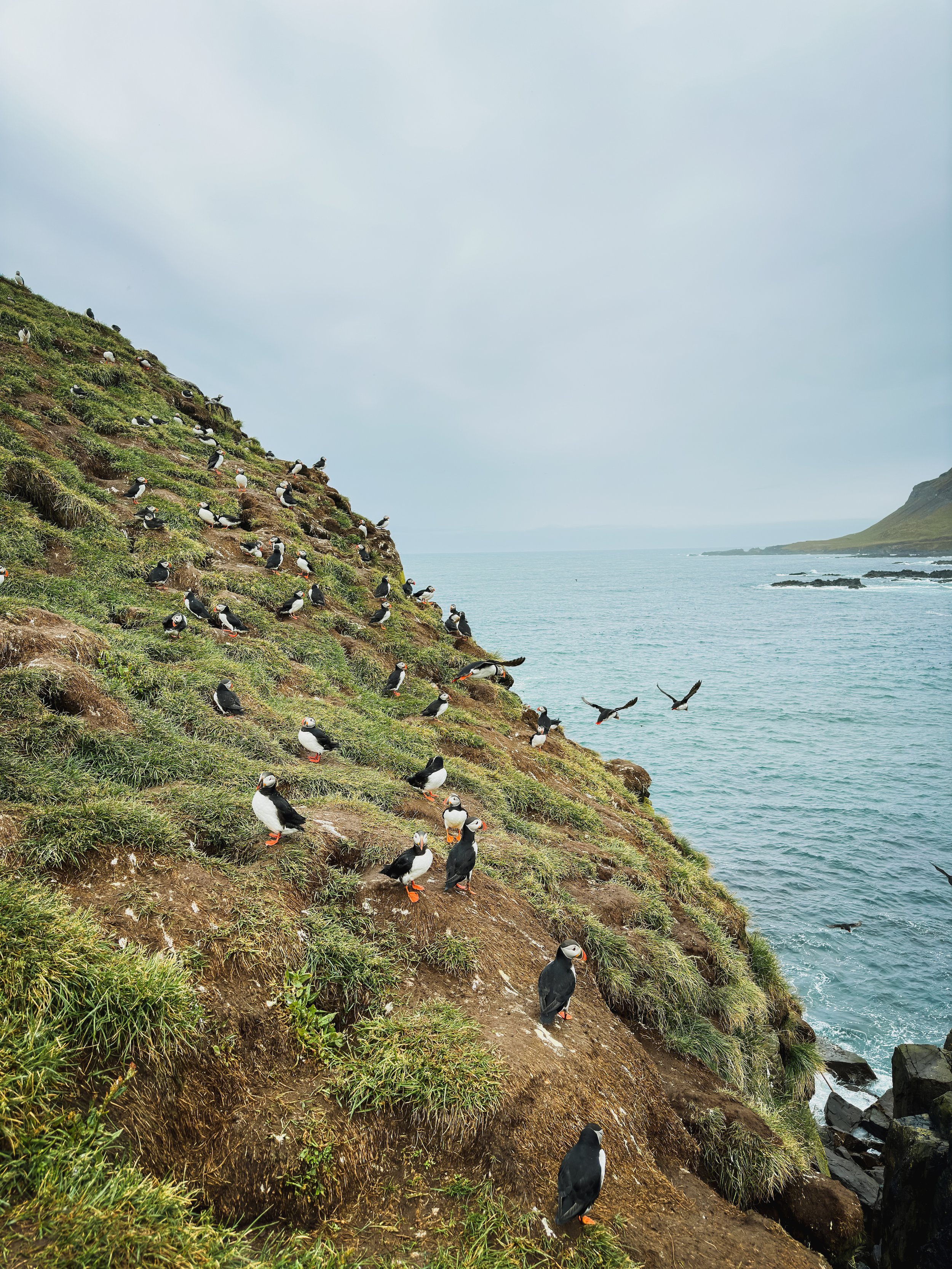
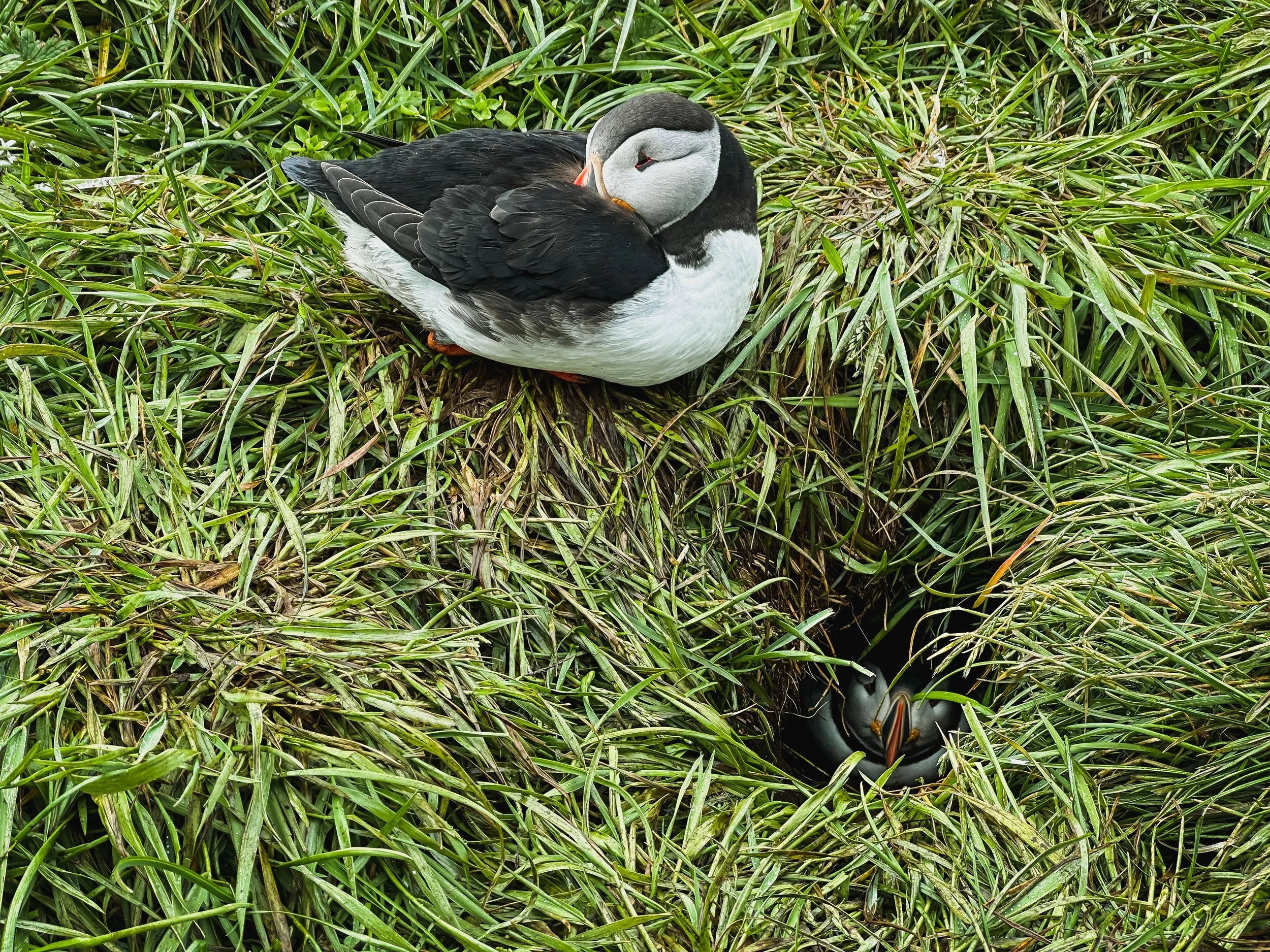
This was a major highlight! You park above the marina, walk past the docks, and head up onto a series of well-maintained wooden boardwalks and viewing platforms. This setup allows you to get incredibly close to the puffins without damaging their burrows or disturbing their nests. It is estimated that 10,000 pairs of puffins nest here from mid-April through mid-August. We stayed for a long time, completely enchanted. We watched them clumsy-landing, taking flight, and diligently protecting their eggs. It was such a peaceful, magical experience.
Day 9: The Power of the North
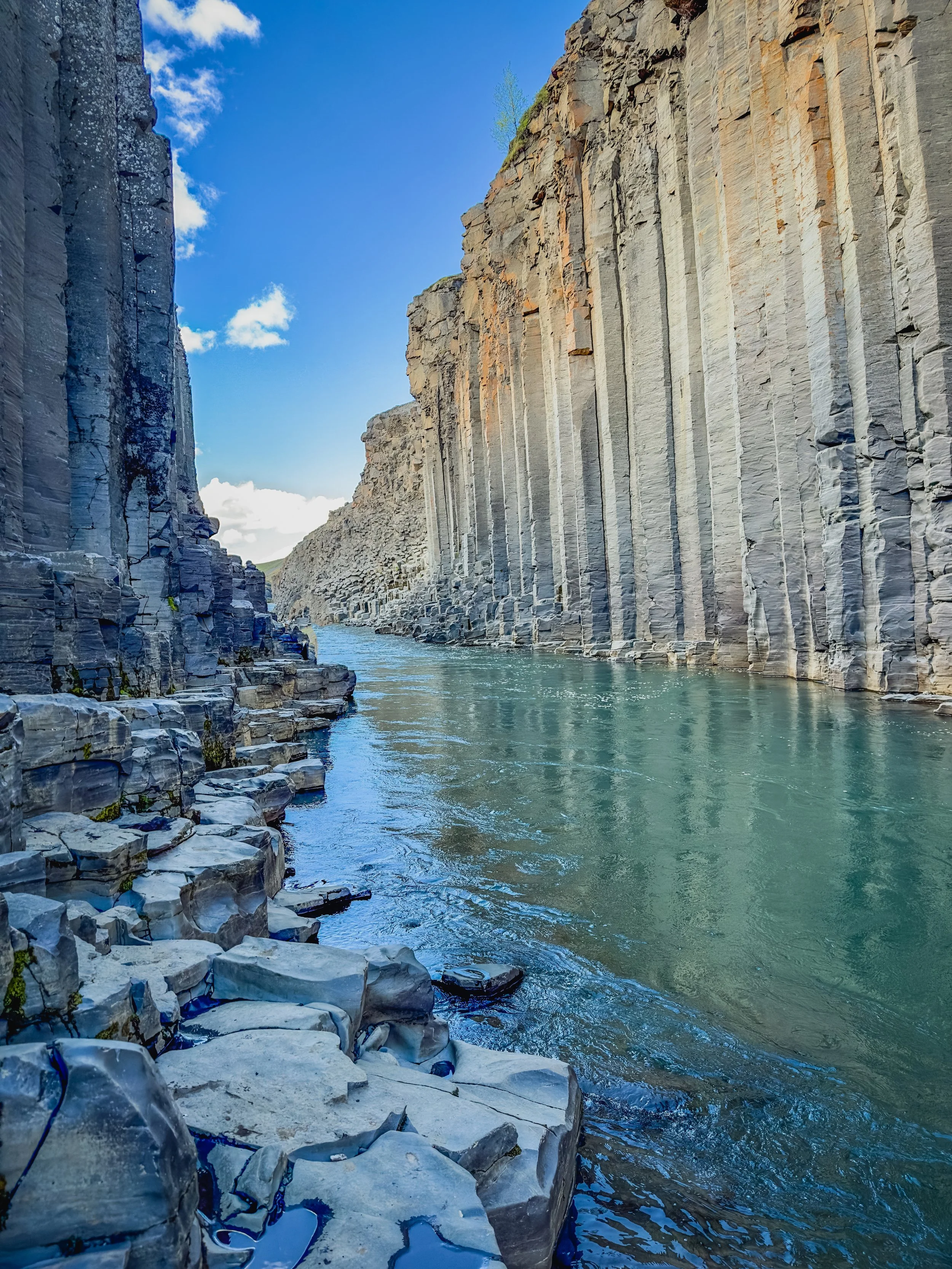
Stuðlagil Canyon: The "exploring Side" Guide
We learned this the hard way so you don’t have to! If you follow Google Maps to the "Main Access," you will end up on the West Side. This side has a large parking lot, coffee shop, and restrooms (fee required), but you can only view the canyon from above via metal stairs.
To get the "Instagram" View (East Side): As you approach the access road (Jökuldalsvegur), look for the "Stuðlagil" sign. When the road splits for West/East, the signage can be confusing and might try to funnel you West. Turn left to reach the East Side parking areas. From the East Side parking, it’s a flat but long hike—about 2.5 miles (4 km) one way. While my family was too tired to climb down, they enjoyed the view and then headed back to the car. I went all the way into the canyon to stand on the basalt columns. If you’ve made it that far, do it! It is an incredible perspective you can't get from the top.
Dettifoss
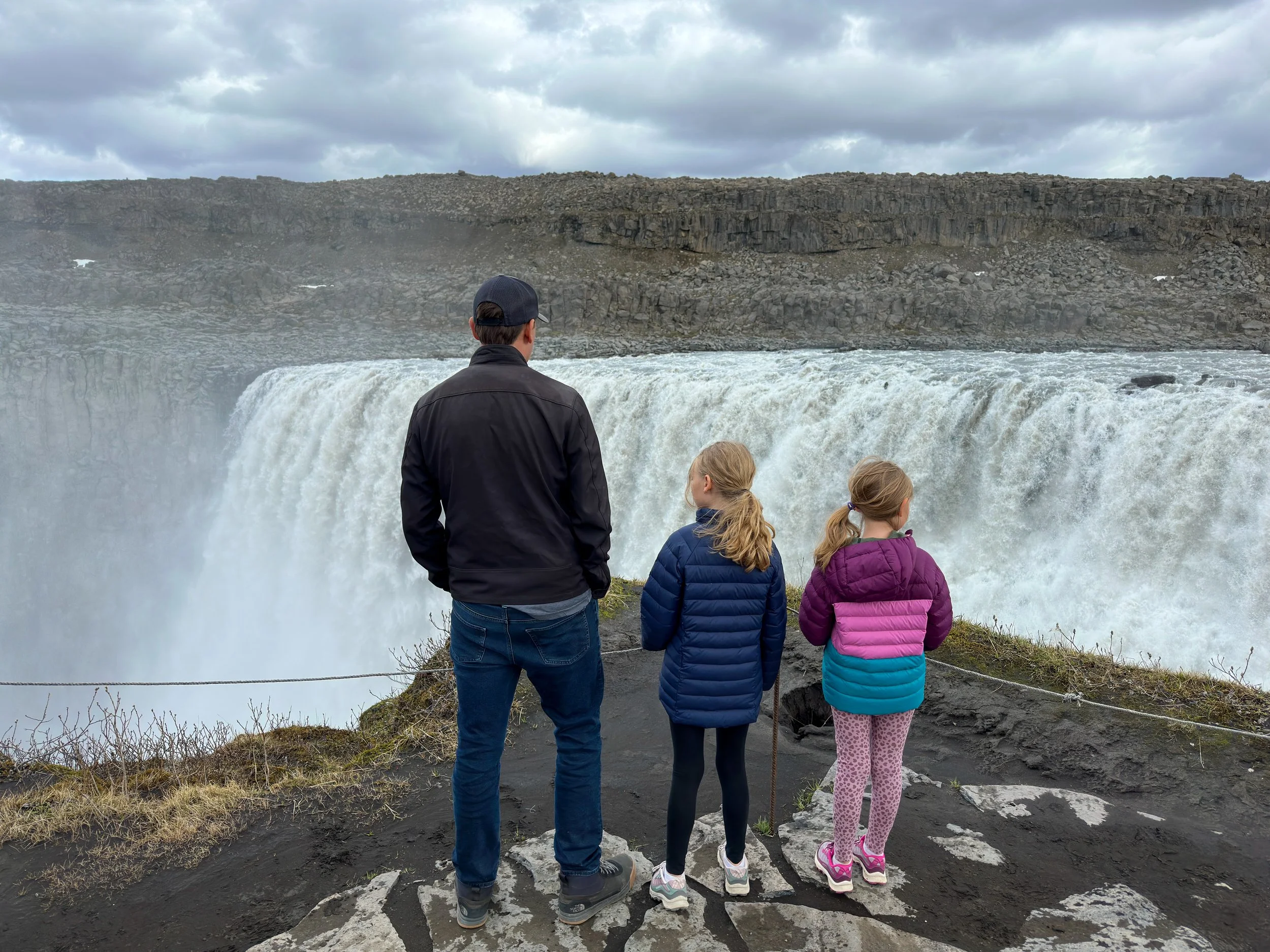
The second most powerful waterfall in Europe, Dettifoss is a beast! The path from the large parking lot is easy, though you’ll navigate some rocky patches and wooden boards over muddy areas. The power of the waterfall is immense, though it can be hard to wrap your brain around the sheer scale since you’re mostly looking down into a thunderous cloud of mist.
Mývatn Nature Baths
We chose to skip the Blue Lagoon in favor of the Mývatn Nature Baths, as we’d heard the former has become a bit of a commercialized "tourist trap.” No matter which commercialized hot springs you visit, be prepared for the mandatory pre-shower. Most showers are communal; my girls chose to wait for the two available private stalls. The hot springs was a cool experience and very relaxing, but honestly, it wouldn't make our "must-do-again" list.
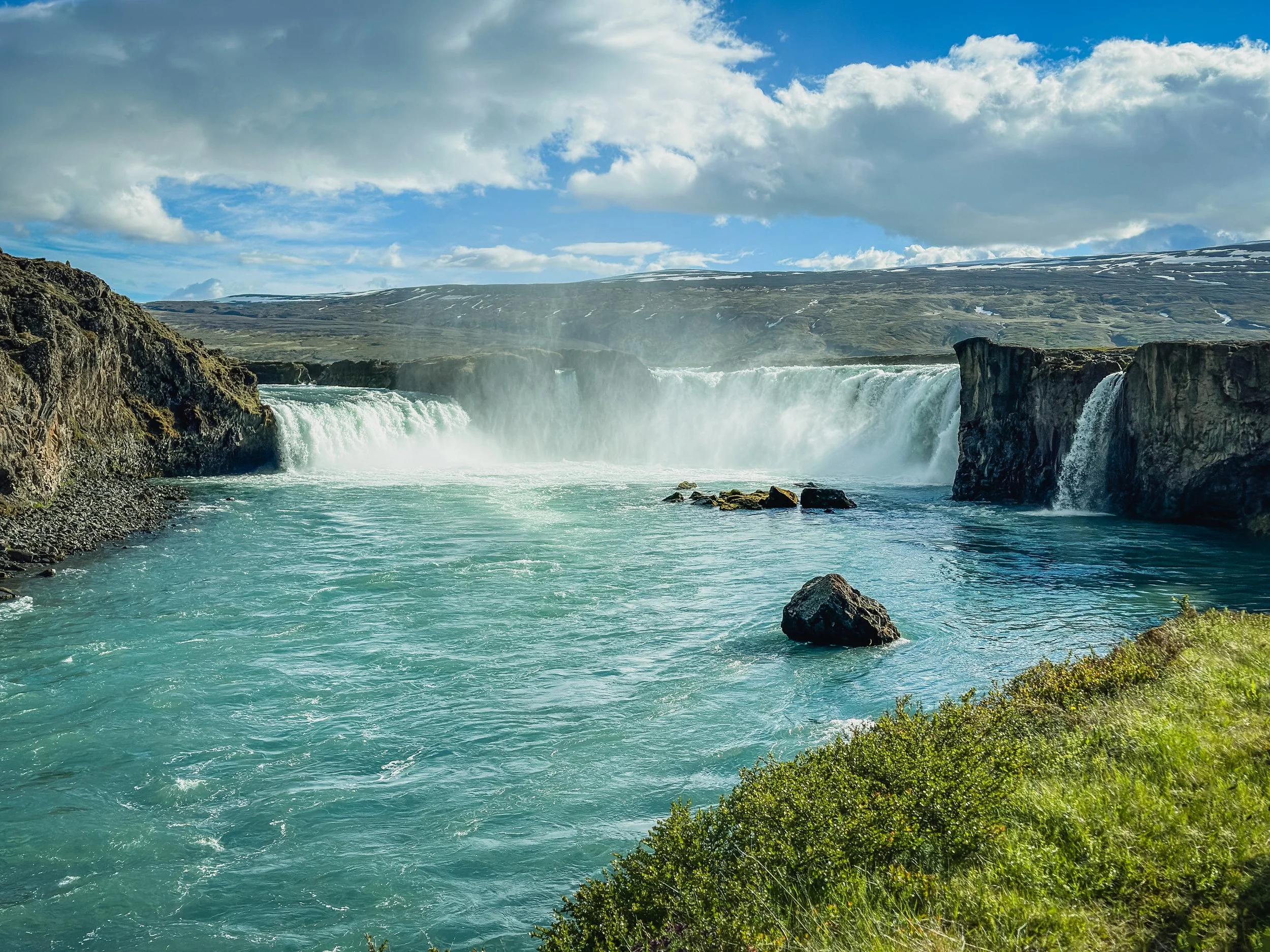
Goðafoss (Waterfall of the Gods)
Parking is free and plentiful here, and paths allow you to view the falls from both sides. We started on the concrete path with plans to explore the other side, but the sun finally came out! We decided to scrap the extra walking and just sit in the sunshine, soaking in the view.
Day 10: Akureyri & Icelandic Horses
Exploring the "Capital of the North"
We finally made it to Akureyri, the second-largest city in Iceland. It is an incredibly charming place, featuring a pedestrian-only central walkway (Hafnarstræti) lined with colorful shops, restaurants, and even a small playground. We were lucky enough to stay in an Airbnb within walking distance, which made it easy to soak in the local atmosphere.
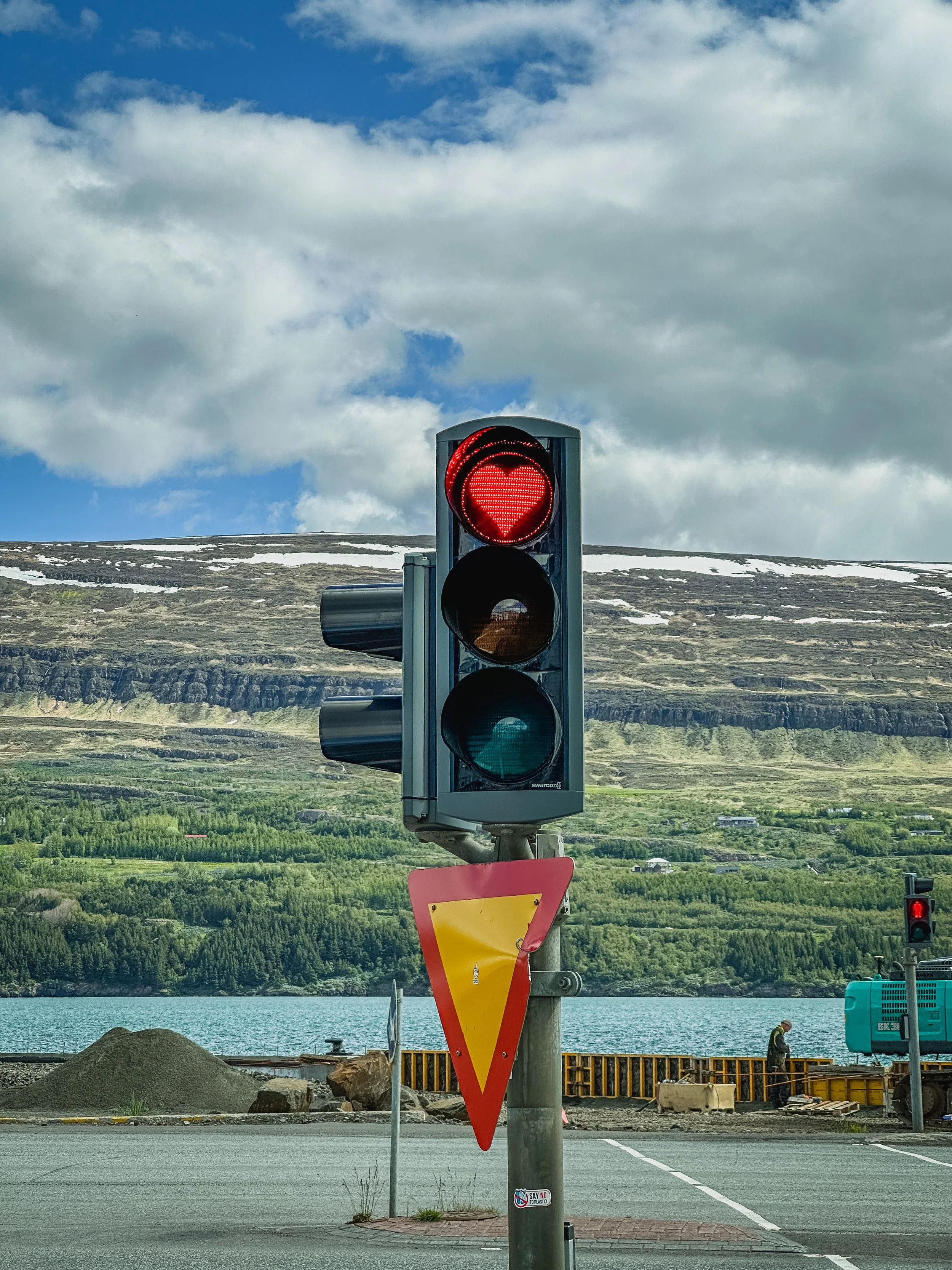
Keep an eye out for the red traffic lights—in Akureyri, they are shaped like hearts!
Horseback Riding with Pólar Hestar
When we travel, we make sure everyone gets a say in the itinerary. For the girls, the top priorities were horseback riding and whale watching, so today was all about the horses! We booked a 1.5-hour ride with Pólar Hestar (located at Grýtubakki farm).
We all mounted our sturdy Icelandic horses and set off on a stunning trail. We rode along a peaceful river and through rolling fields with views overlooking the North Atlantic. Our guide was wonderful, patient, and knowledgeable. Seeing the girls so happy on their horses was a highlight of the trip—it was a gentle, beautiful way to experience the northern countryside.
Day 11: The Giants of Skjálfandi Bay
Whale Watching in Húsavík
We drove to Húsavík, a charming fishing town in the far north, to cross a major item off my husband’s bucket list: seeing a Blue Whale. While Húsavík is the best place to find them, we learned after booking that the chance of spotting one is only about 2%—a true needle in a haystack!
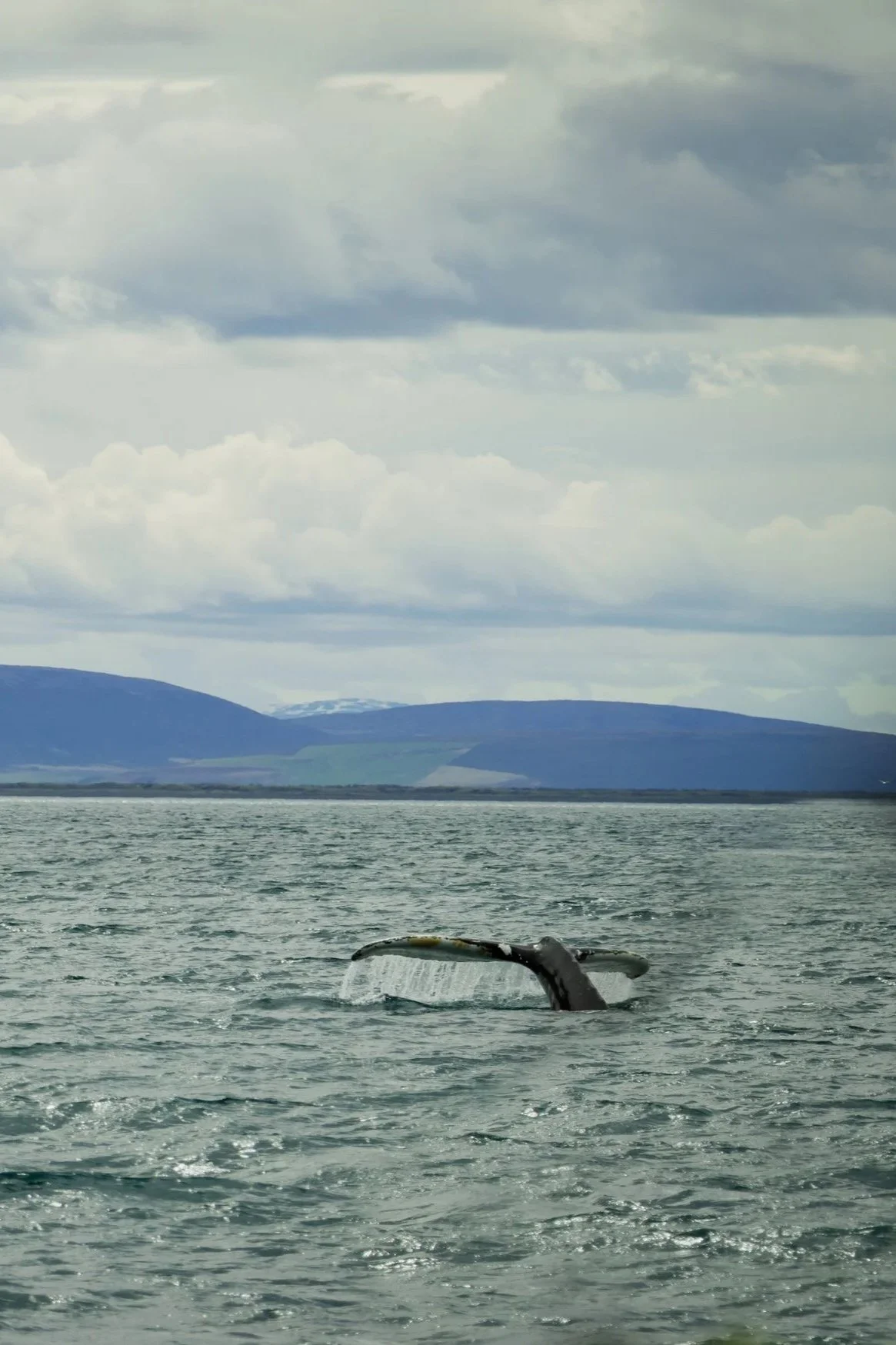
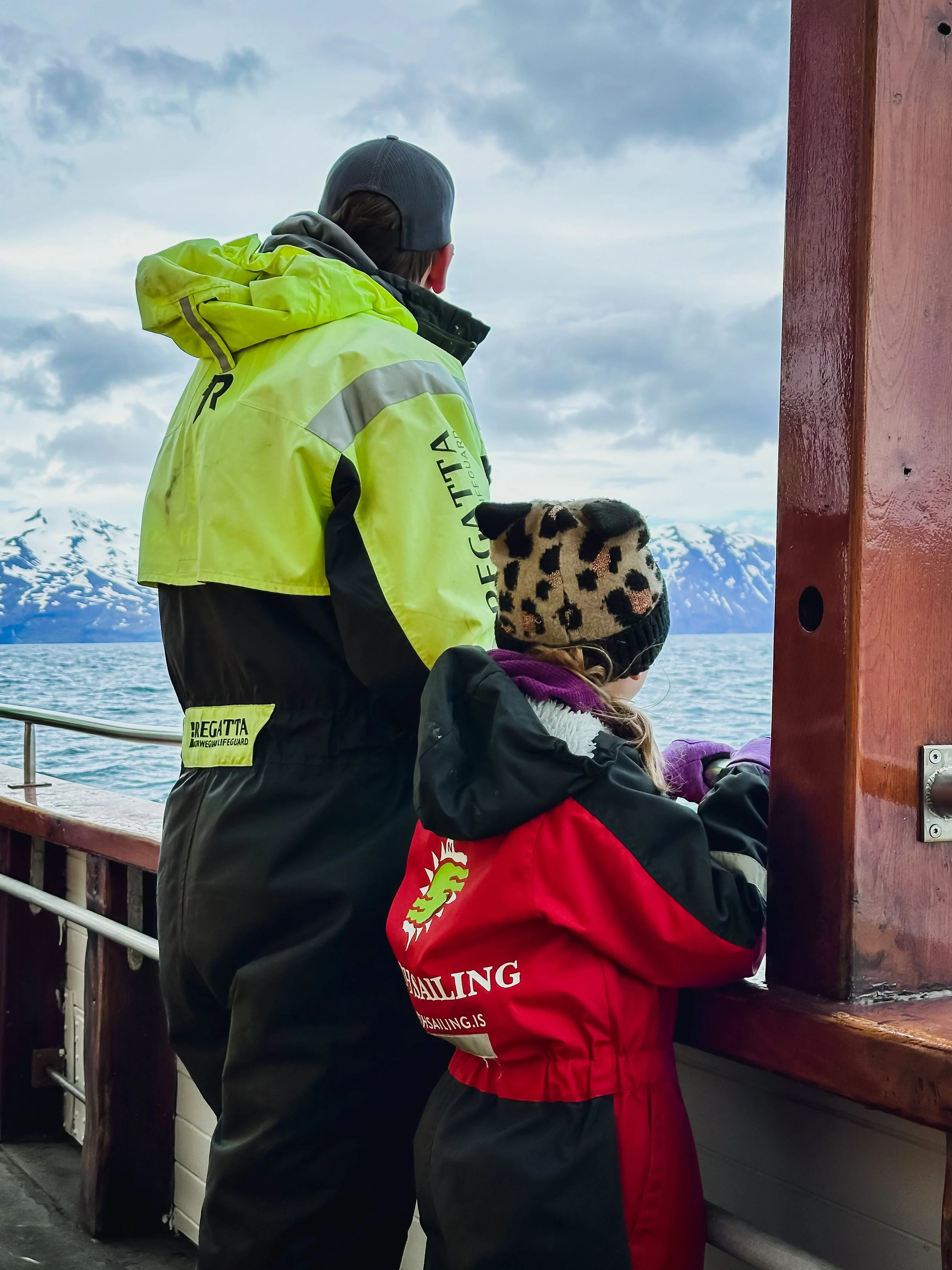
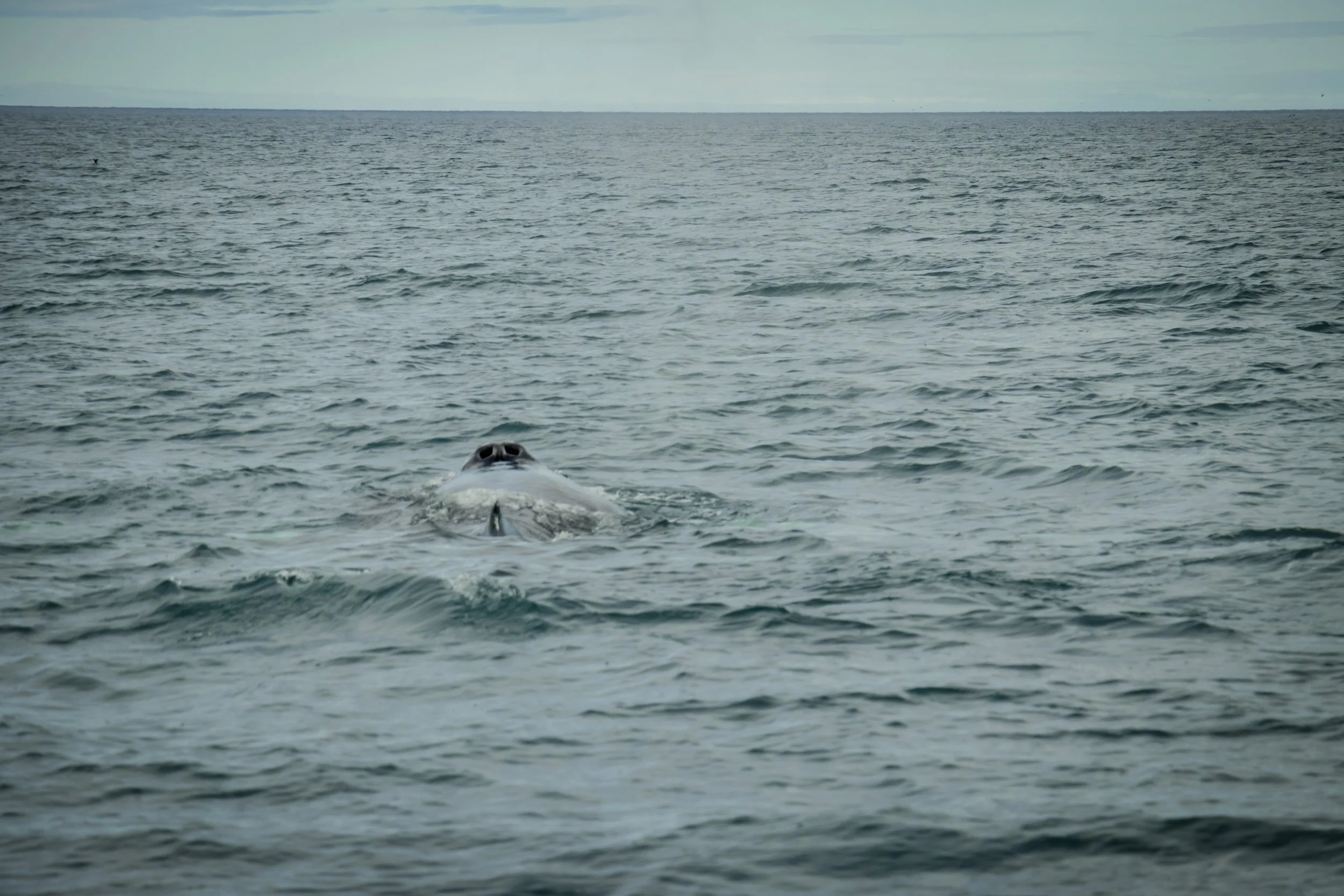
Before heading out, the crew handed out thick, thermal jumpsuits. They may look a bit silly, but they were lifesavers against the biting Arctic wind! We initially spotted several Humpback Whales. We saw plenty of spouts and one majestic tail dipping into the water, though unfortunately, no one decided to breach for us. Suddenly, the announcer called out that she’d spotted a "blow" significantly larger than the rest. Against all odds, it was a Blue Whale! I’ll admit, it was a little anticlimactic at first. Even though it's the largest animal to ever live, you only see a tiny fraction of its massive back when it surfaces to breathe. Still, knowing we were in the presence of such a rare giant was incredible. Bucket list item: checked!
Húsavík Whale Museum
After the boat ride, we warmed up at the Whale Museum. It is packed with fascinating facts and massive skeletons that really put the size of these creatures into perspective. The museum features a full Blue Whale skeleton that is so enormous it requires an entire room of its own. Seeing the bones up close made our "small" sighting in the bay feel much more significant!
Day 12: The Long Road Back
This was our longest day of driving, heading back to Reykjavík, but we made the most of it by exploring the Snæfellsnes Peninsula. We made three final, memorable stops:
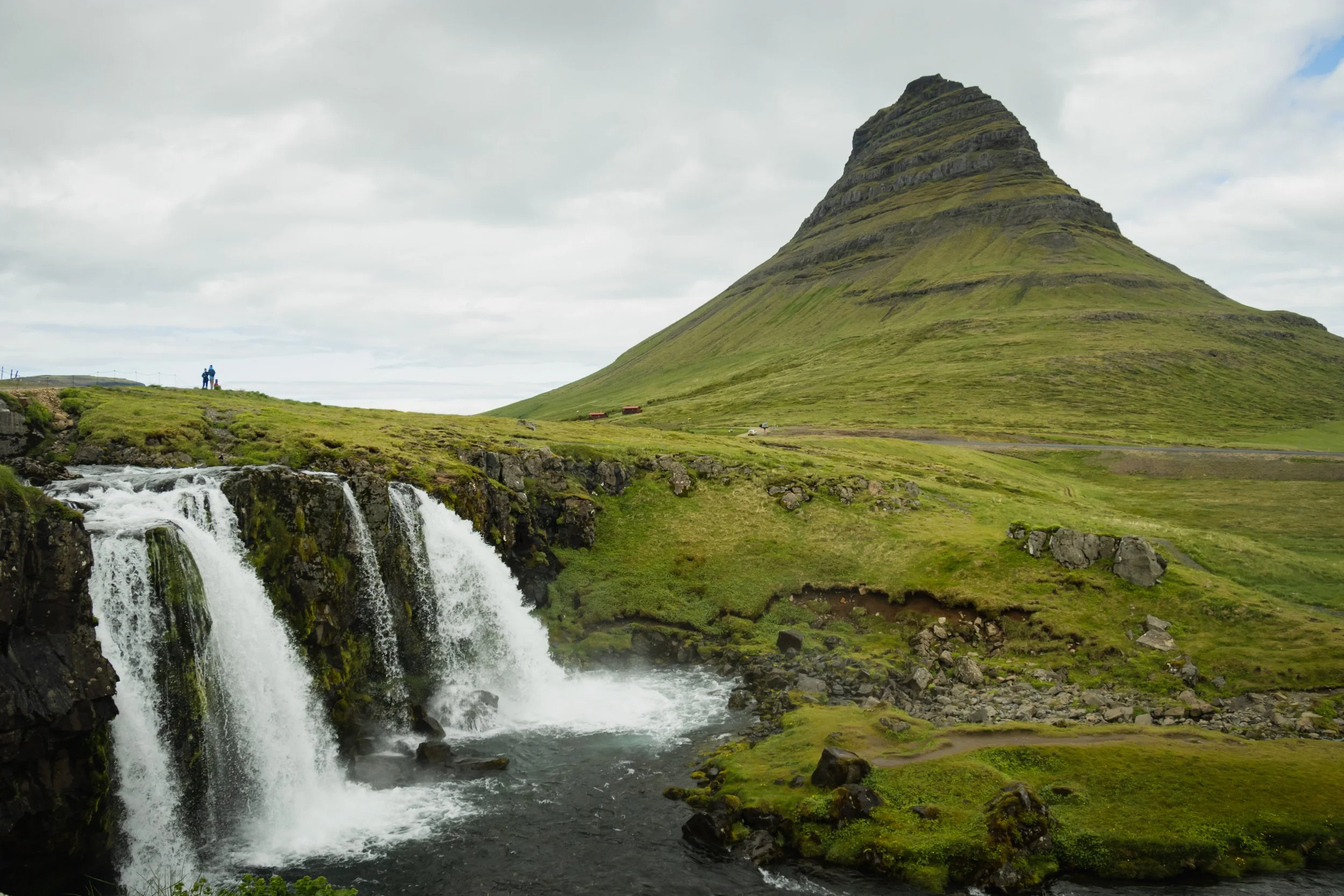
Kirkjufellsfoss
This is one of the most photographed spots in all of Iceland. The waterfall itself is beautiful, but the real draw is the composition: from the right angle, you can capture the falls with the perfectly cone-shaped Kirkjufell Mountain (the "Arrowhead Mountain" from Game of Thrones) towering in the background.
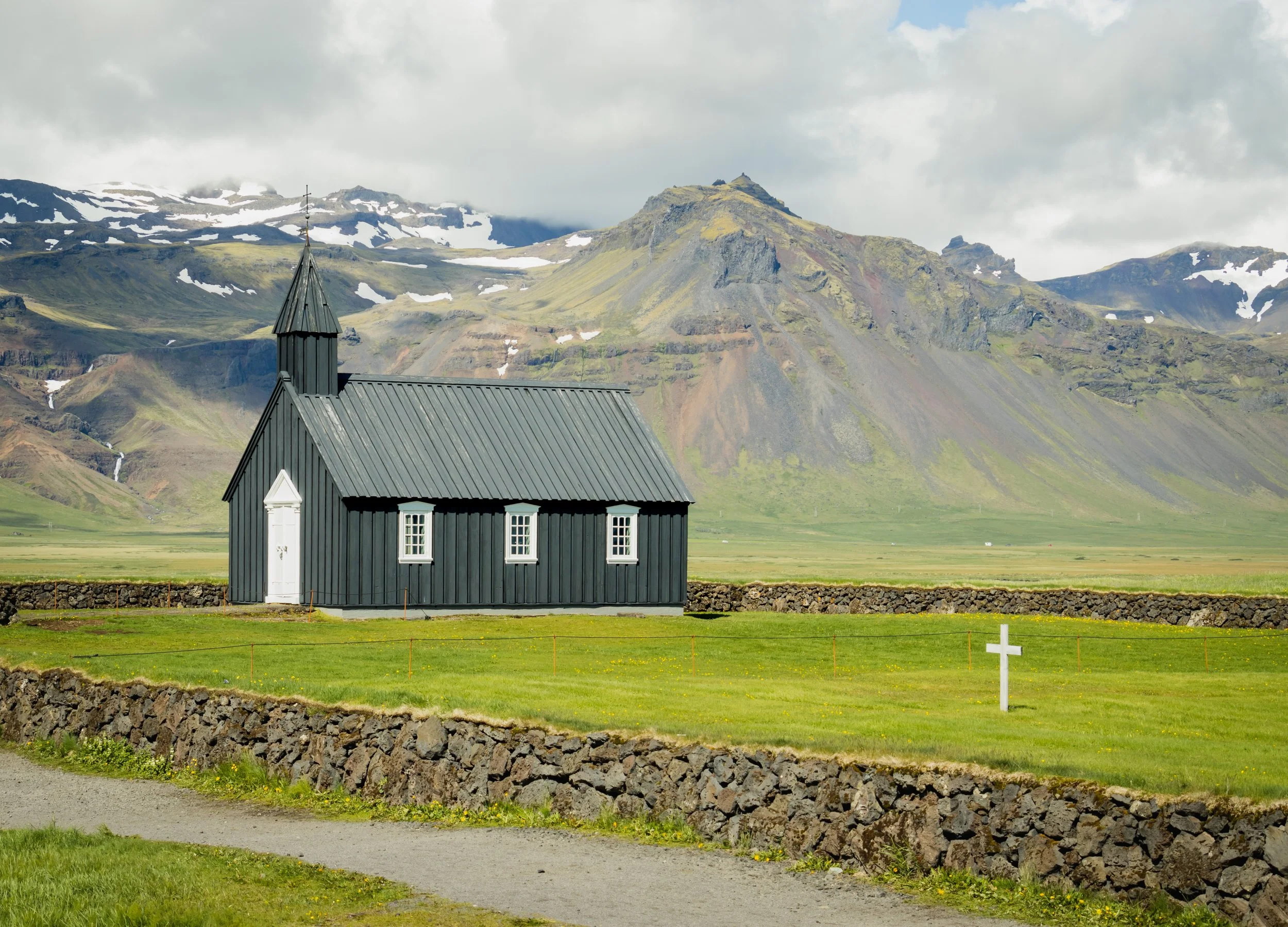
Búðakirkja (The Black Church of Búðir)
This minimalist black wooden church sits in the middle of a vast field. The black exterior creates a striking contrast against the surrounding mountains and the blue of the Atlantic.
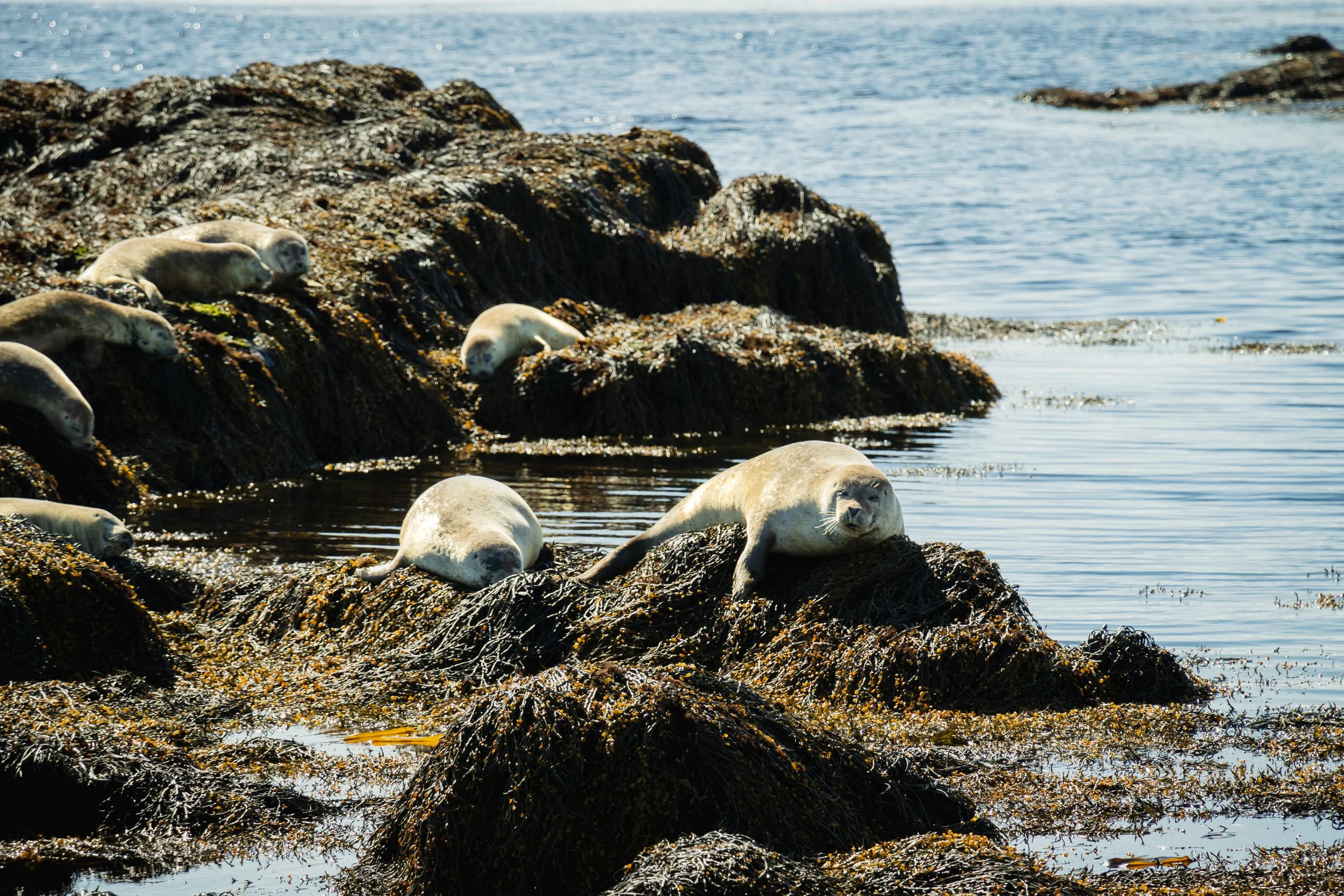
Ytri Tunga Beach
We parked at the beach lot, walked along the beach path and scrambled across the rocks to get a better vantage point. We were rewarded with a great view of several seals sunning themselves on the rocks.
Day 13: Reykjavík
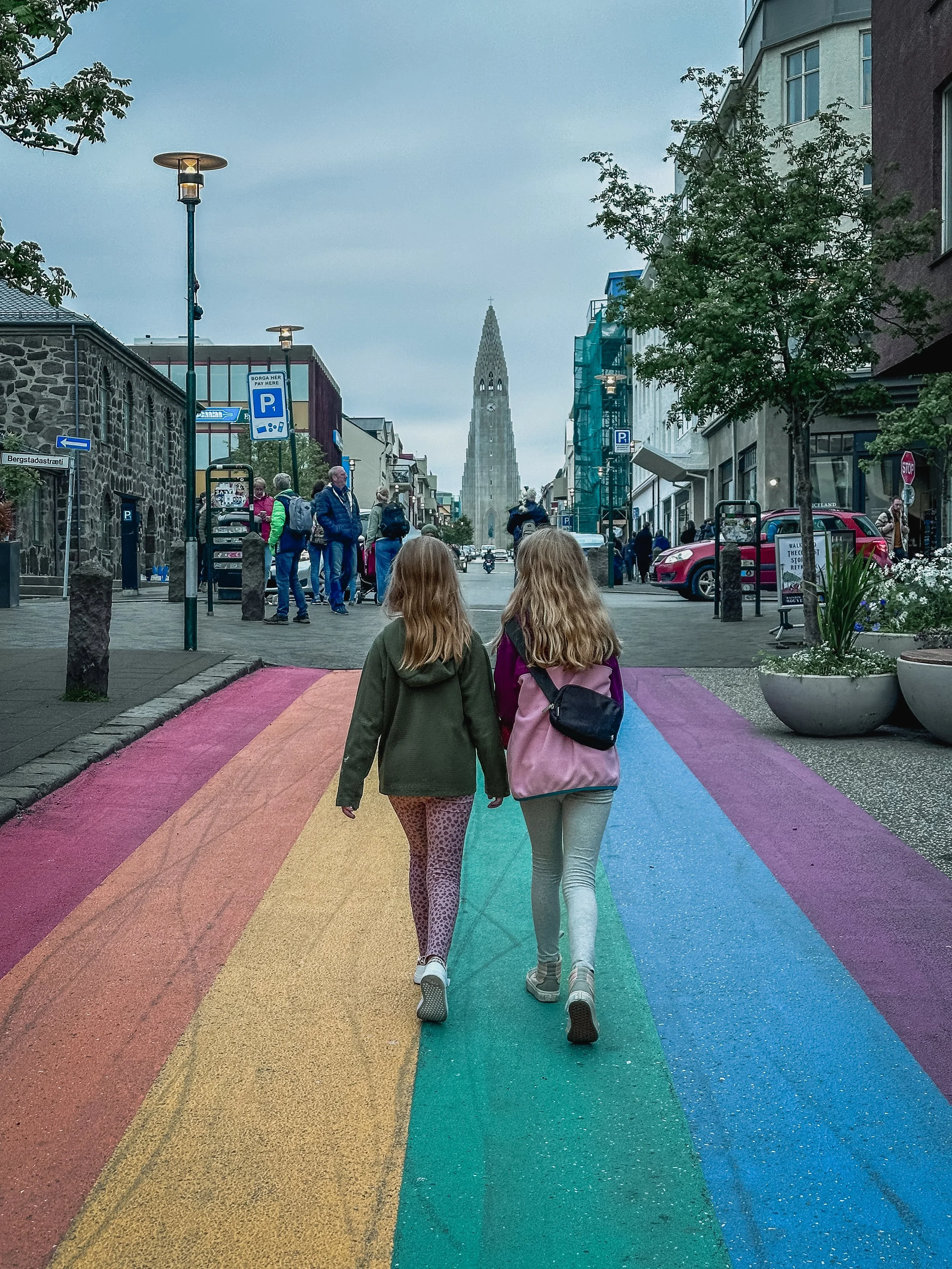
After so much driving, it was wonderful to have a low-key day back in the capital. We spent the morning wandering through downtown Reykjavík, doing some souvenir shopping, and just soaking in the city's atmosphere.
The Perlan
We spent the afternoon at the Perlan, which is a fantastic museum for anyone wanting to understand the science behind Iceland's magic. We caught the Aurora Planetarium show, which was a beautiful way to "see" the Northern Lights since we visited during the bright summer months with 24-hours of sun. We wandered through the museum's interactive exhibits, learning about glaciers and volcanoes, and then took a stroll through the stunning fields of lupine surrounding the building. It offers one of the best 360-degree views of the city!
Day 14: The Golden Circle
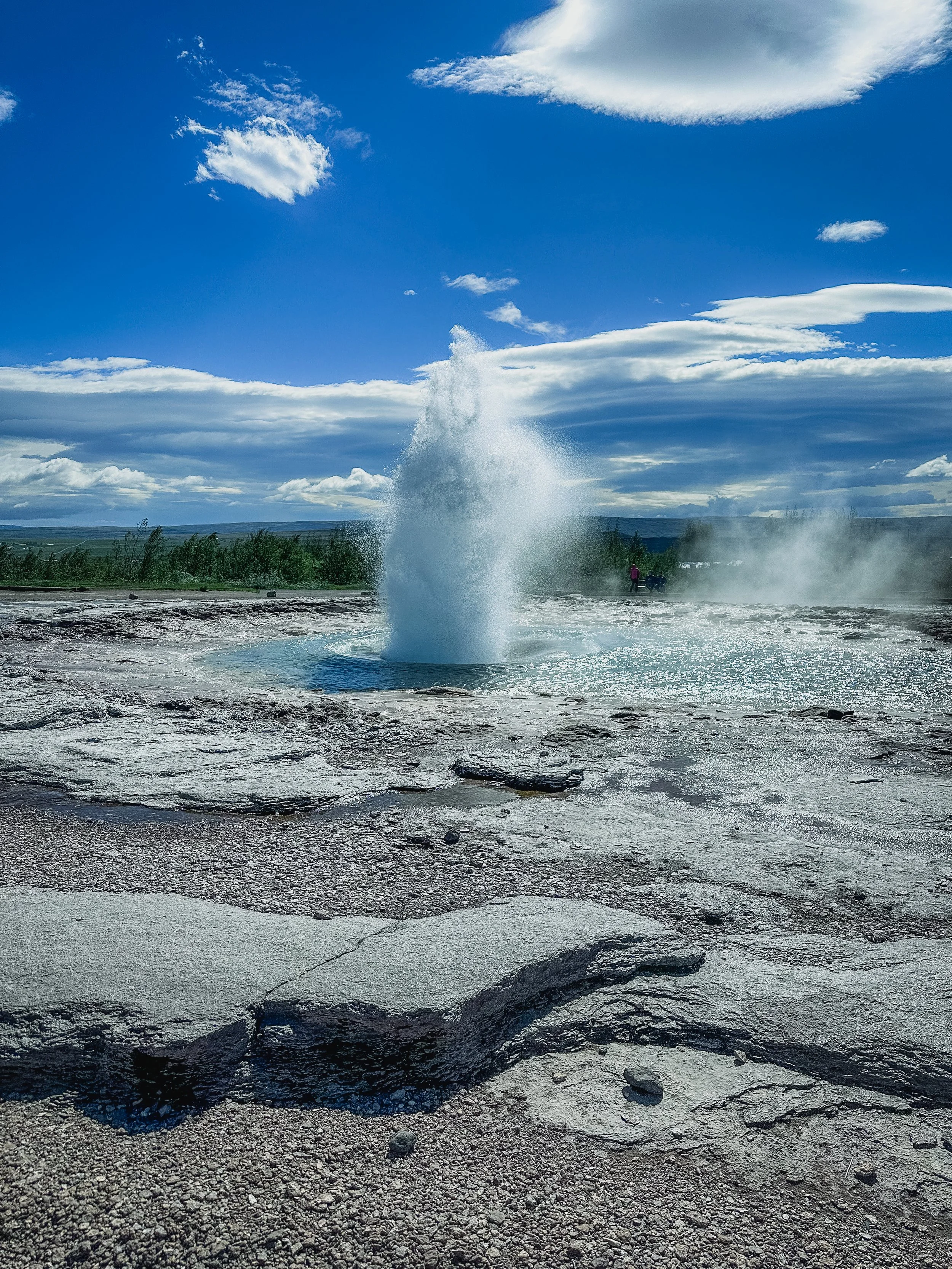
For our final full day, we drove the famous Golden Circle. This route is a favorite for visitors who don't have time for the full Ring Road, and as a result, the crowds were much larger than anything we’d experienced elsewhere on our trip. Even so, the sights are iconic for a reason!
Geysir Geothermal Area
We visited the home of the "original" geyser. While the famous Great Geysir is mostly dormant now, its neighbor, Strokkur, is incredibly reliable. We watched it blast boiling water high into the air every 15-20 minutes—it’s a powerful reminder of the geothermal energy humming right beneath your feet.
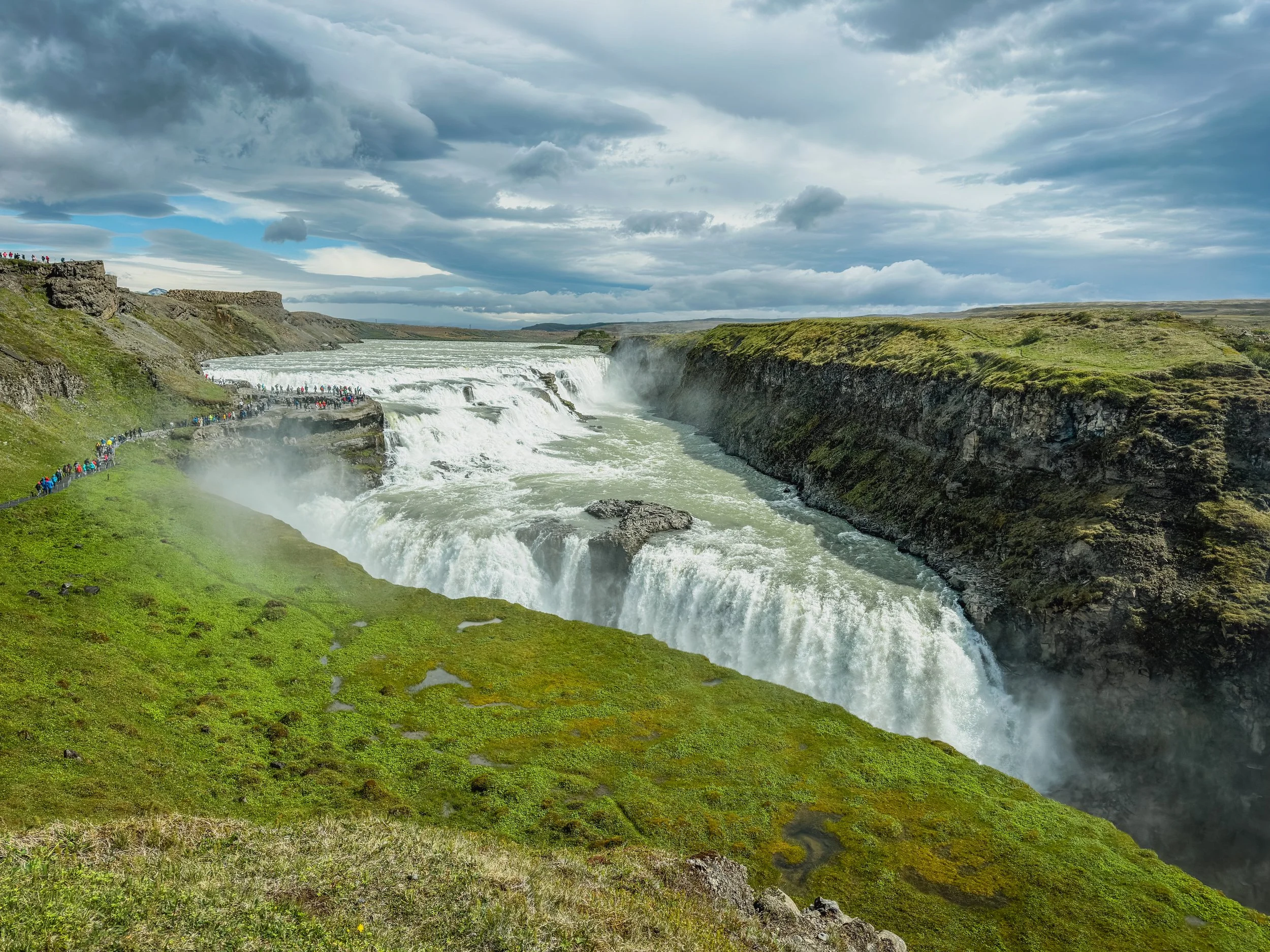
Gullfoss (The Golden Falls)
Our very last waterfall of the trip! Gullfoss is massive and multi-tiered, with water thundering down into a deep canyon. Standing on the edge and feeling the mist one last time was a beautiful way to say goodbye to Iceland's waterfalls.
Traveling to Iceland with Kids? Look for the "Ærslabelgur"!
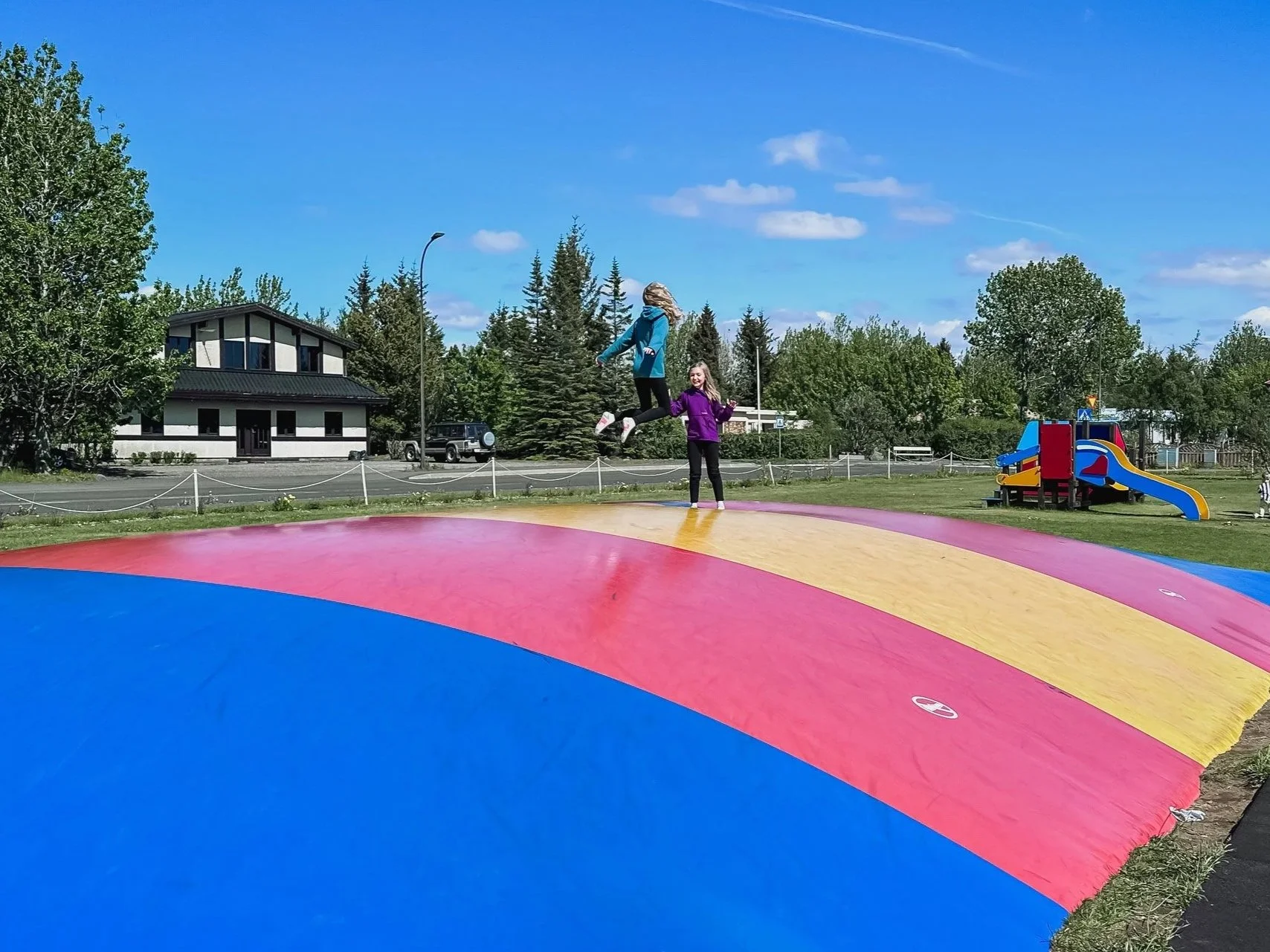
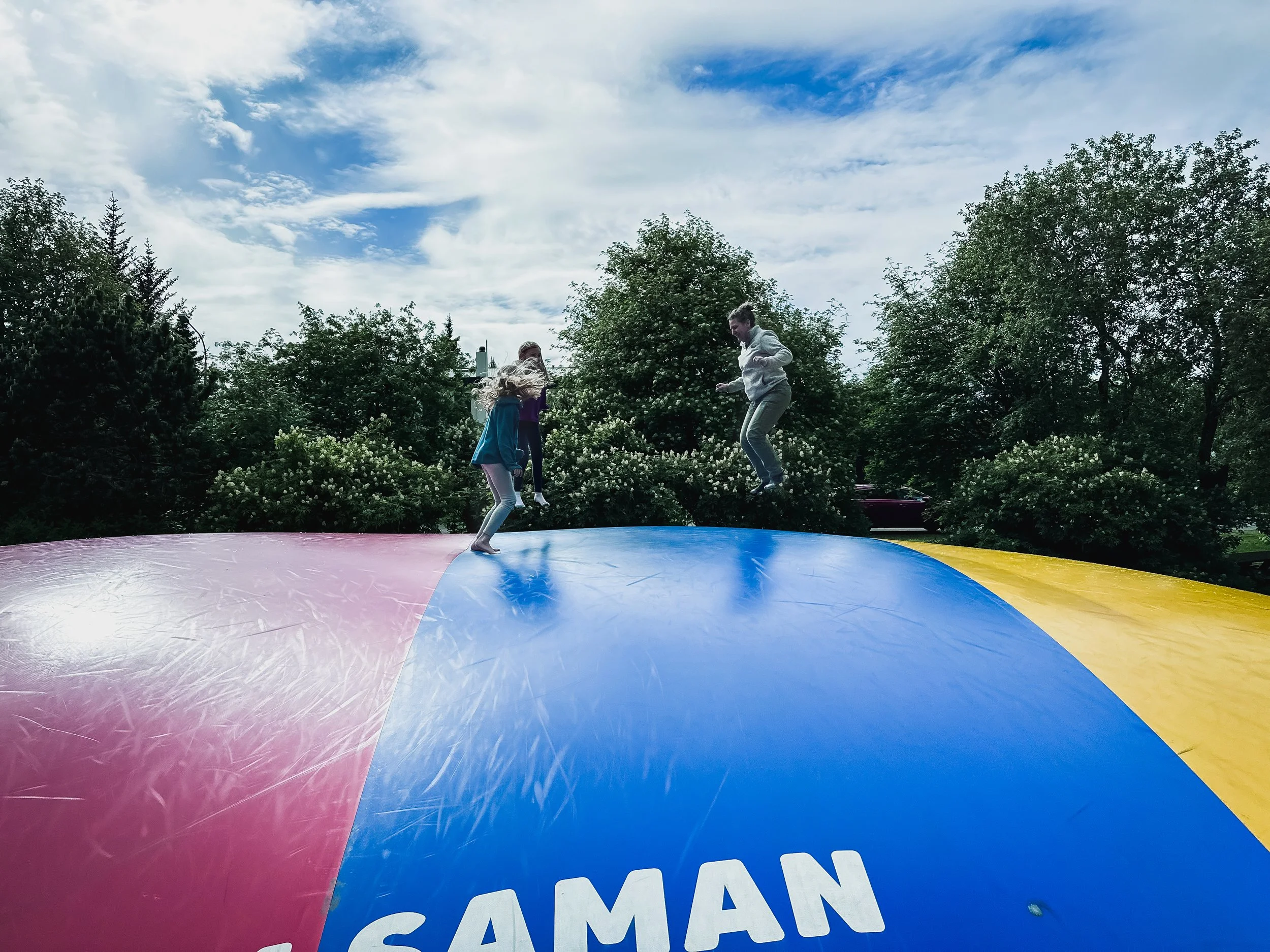
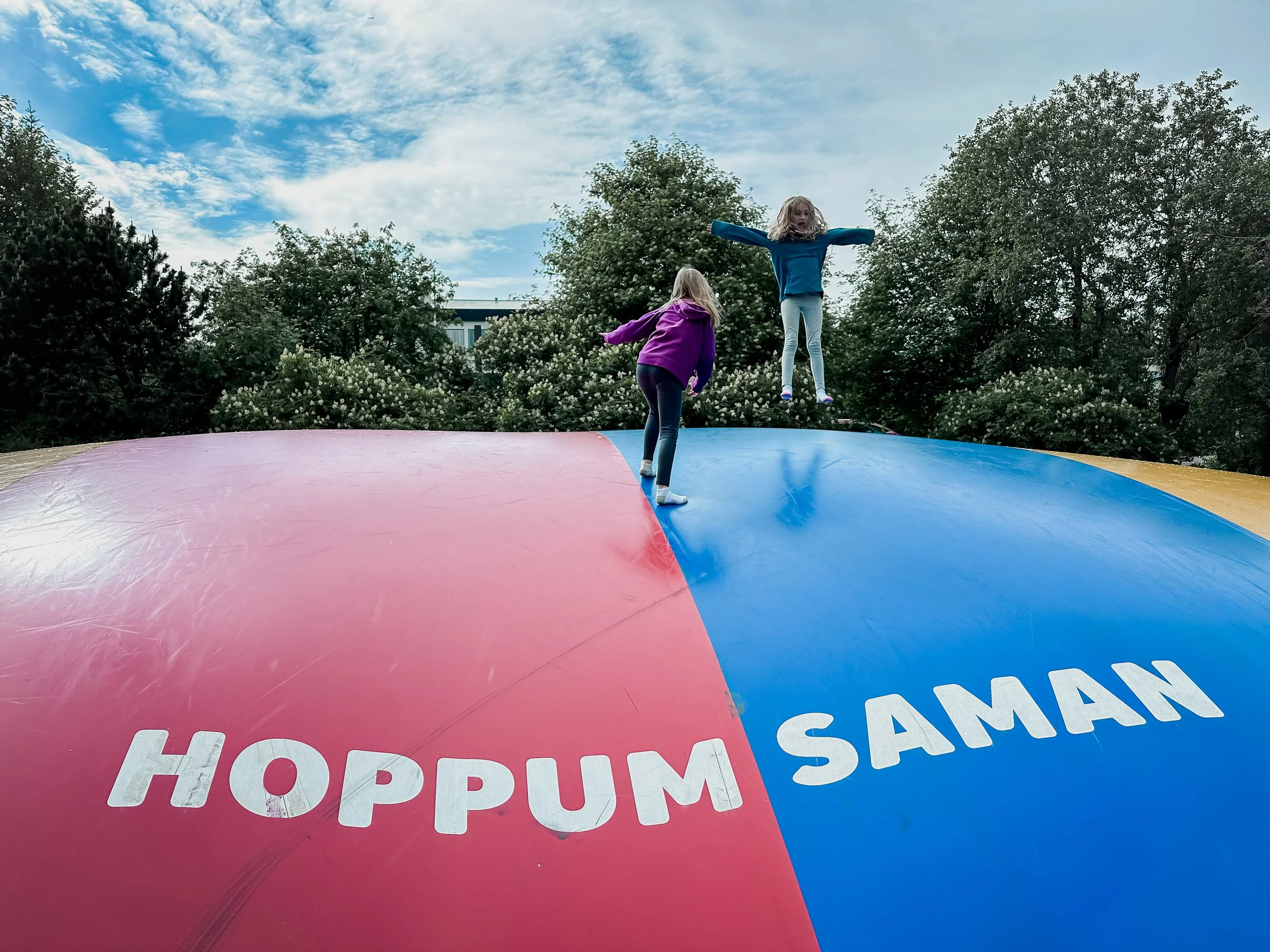
While Iceland ranks high on our list of amazing adventures—with more waterfalls than we could count and truly out-of-this-world scenery—we quickly realized that the girls still needed time to just be kids and play.
On our first drive from Reykjavík to Hvolsvöllur, we spotted what looked like a giant, colorful, half-buried balloon. We soon discovered these are called ærslabelgur (jumping pillows), and they are scattered all over the country!
Every time we saw one, we made it a point to stop. It was the perfect way for the girls (and honestly, sometimes my husband and I!) to have a blast and bounce out all that "car sitting" energy. They are the unsung heroes of Icelandic road trips with kids!
There is actually a dedicated website and interactive map that shows the location of every jumping pillow in Iceland. We didn’t know about it at the time, we would just see one as we were driving and pull over! One time, we used Google Maps to find one in the North.
Iceland is wet, cold, expensive, and impossible pronounce any of the locations—but it is also the most beautiful, powerful and magical place we’ve ever been. If you're thinking about going: Do it! Wear layers, have rain gear with you always, be patient with the weather, and keep your eyes open. You never know when you'll see a Blue Whale or a hidden valley.
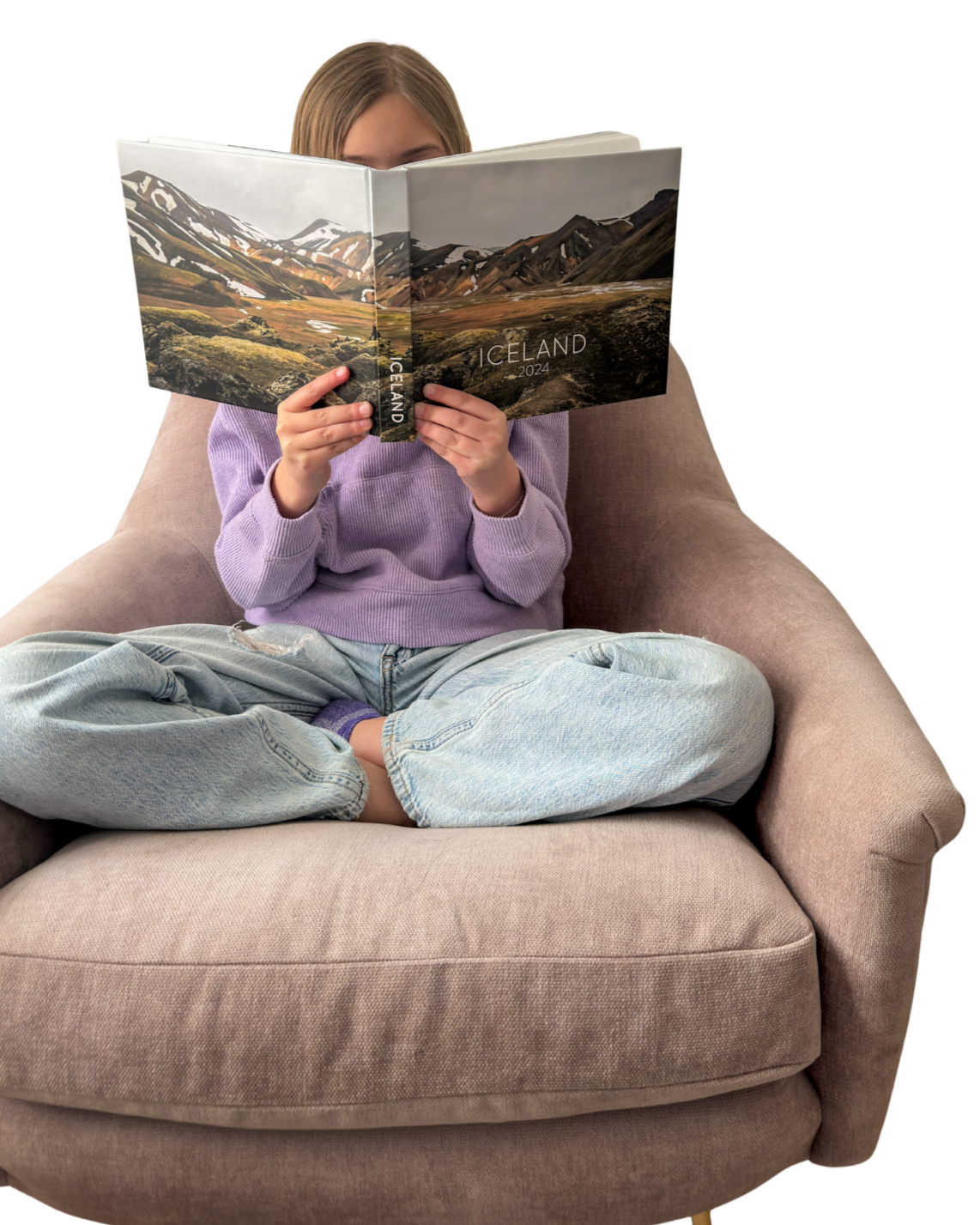
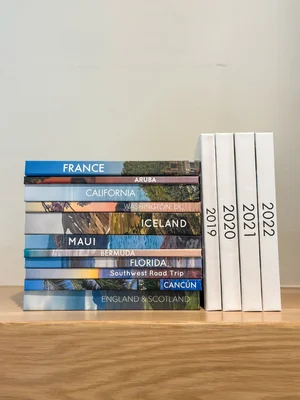
Planning a vacation to the Iceland? When you return home with all your incredible memories and photos, I can transform them into a beautifully curated photo book.
Vacations go by so quickly, but the memories deserve to last. We want those moments preserved in a way we can hold in our hands, revisit often, and cherish for years to come.
Instead of letting your photos sit on your phone, let’s turn them into something tangible—something that tells the story of your adventure for generations. Contact me for more information, or learn more here!